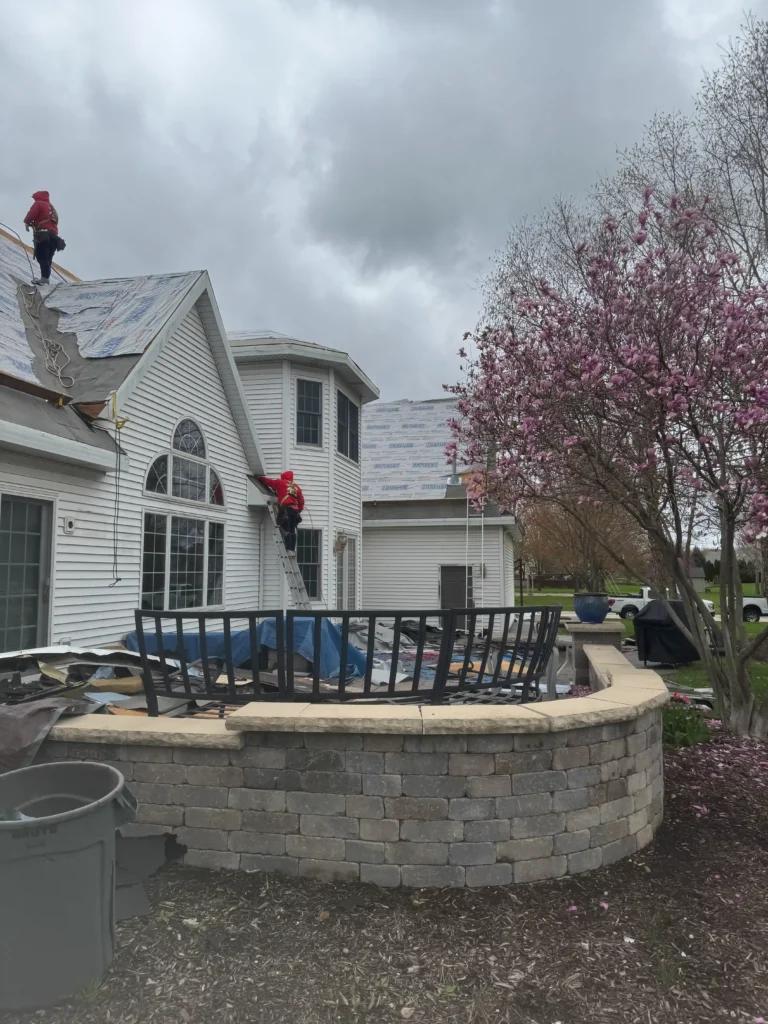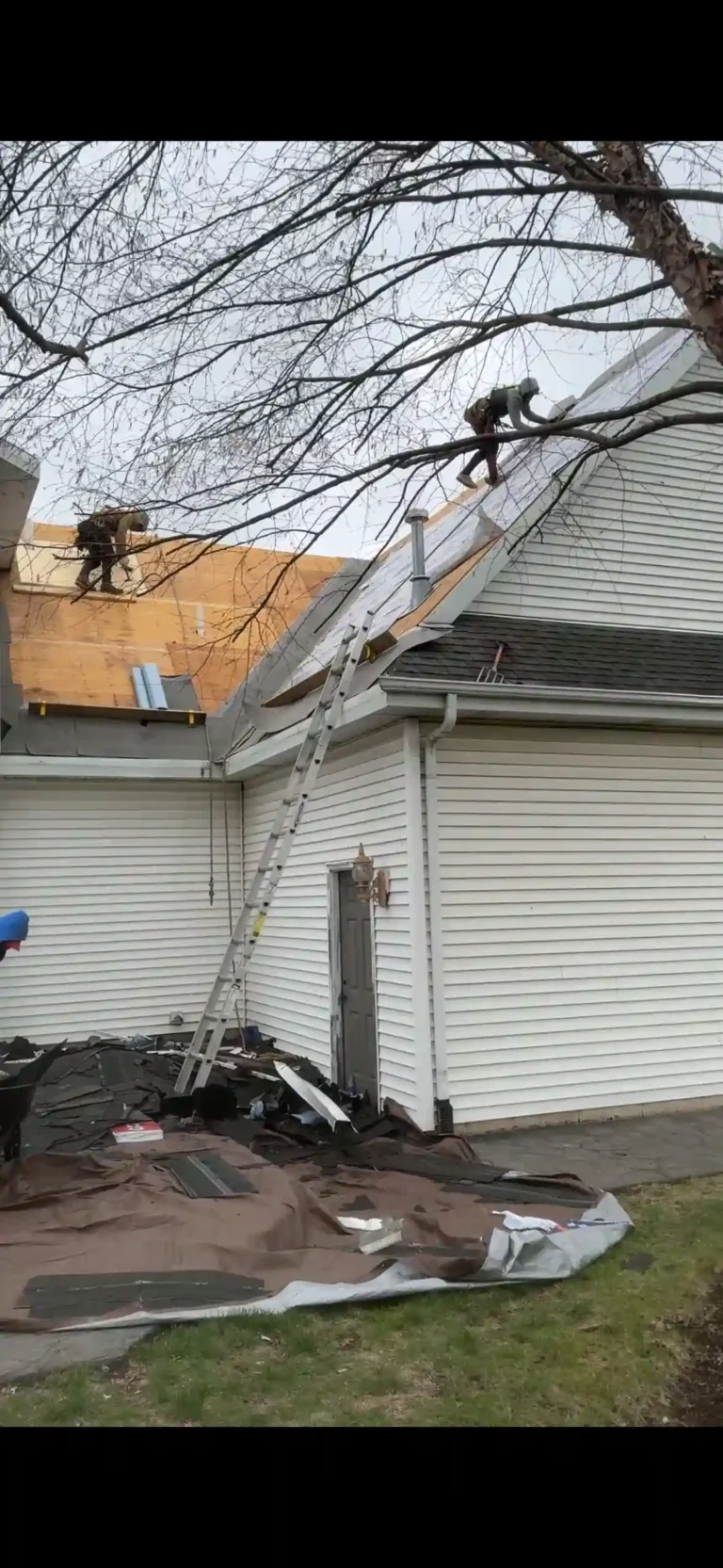

Fall storms can leave Frankfort homeowners dealing with bent gutters, loose downspouts, blocked drainage, and water collecting near the foundation. While roof shingles often receive the most attention after severe weather, gutters are equally important for protecting the exterior. Understanding gutter storm damage Frankfort IL homeowners may experience helps identify drainage problems before winter temperatures make them harder to correct.
Throughout Frankfort, autumn brings falling leaves, strong winds, heavy rainfall, and changing temperatures. Mature trees surrounding residential properties can fill gutters with debris, while powerful gusts may loosen fasteners or damage exposed downspouts. Once freezing conditions arrive, trapped water can create additional stress on already weakened sections.
Gutter problems rarely remain limited to the drainage system. Overflowing water can reach fascia boards, siding, landscaping, and areas surrounding the foundation. A damaged gutter may also direct runoff behind exterior materials instead of carrying it safely away from the building.
Clearway Exteriors provides gutter inspections, repairs, replacements, and related exterior services throughout Frankfort and nearby Chicagoland communities. This guide explains how to recognize storm damage, determine suitable repairs, and prepare your drainage system before winter arrives.
Why fall storms create drainage problems for Frankfort homes
Autumn storms bring several conditions that affect gutter performance. Strong winds can dislodge fasteners, falling branches may bend gutter sections, and heavy rainfall can overwhelm systems already filled with leaves.
Even gutters that appeared functional during summer can develop problems once debris accumulation increases.
Wind can weaken gutters without pulling them completely loose
Gutters depend on properly secured hangers and sound fascia boards. During severe winds, pressure from branches or flying debris can bend gutter runs and loosen attachment points.
A section may remain connected to the house while developing an incorrect slope. Water then collects instead of moving toward the downspout.
Heavy rainfall exposes existing drainage weaknesses
During an ordinary shower, a partially blocked gutter may continue draining slowly. Intense rainfall reveals the problem when runoff spills over the front edge or escapes behind the gutter.
Repeated overflow can affect nearby siding, trim, and foundation areas.
How homeowners can identify gutter storm damage from the ground
A safe visual inspection is the best starting point after strong winds or heavy rain. Walk around the property once severe weather has passed and look for changes in gutter alignment.
Avoid climbing ladders near wet surfaces, broken branches, or damaged electrical lines.
Common warning signs include visible changes in the drainage system
Look for the following conditions:
- Gutters sagging or pulling away from fascia boards
- Downspouts bent, disconnected, or displaced
- Water overflowing during rainfall
- Dents, cracks, separated joints, or damaged end caps
- Soil erosion or standing water near the foundation
These signs suggest that gutter cleaning, repair, or replacement may be necessary.
Water stains can reveal damage that is easy to overlook
Dark marks beneath gutters sometimes indicate recurring overflow. Discolored fascia boards or peeling exterior paint can also suggest that water is reaching areas that should remain protected.
Because stains may develop gradually, homeowners should compare the condition of different roof elevations.
Loose gutter hangers can become a serious winter problem
Gutter hangers secure the drainage channel to the roofline. When these connections loosen, the gutter may begin sagging or separating from the fascia.
Fall storms can place additional pressure on aging attachment points, particularly when branches or accumulated debris strike the system.
Sagging sections prevent proper water movement
Gutters are installed with a controlled slope toward downspouts. If the channel becomes uneven, water can remain trapped in low areas.
Standing water increases debris accumulation and can place additional weight on weakened hangers.
Damaged fascia should be inspected before new fasteners are installed
Loose gutters are not always caused by failed hardware. Moisture-damaged fascia boards may no longer provide a secure attachment surface.
Simply installing larger screws into deteriorated wood does not address the underlying problem.
Sound attachment surfaces support lasting repairs
Before reinstalling gutter sections, a professional should evaluate the fascia and replace damaged materials when necessary.
Correcting the supporting structure helps prevent the same gutter section from pulling loose again.
Downspout damage can direct water toward the foundation
Downspouts carry water from the gutters toward designated discharge locations. If a storm separates an elbow or crushes a downspout section, water may escape directly beside the building.
This can lead to saturated landscaping, eroded soil, and moisture accumulation near foundation walls.
Disconnected downspouts deserve immediate attention
A downspout that has separated from the gutter outlet may release large amounts of roof runoff against siding or masonry.
Reconnecting the component requires checking its brackets, elbows, and discharge arrangement.
Underground drainage connections may also become blocked
Some homes use buried extensions that carry runoff away from the structure. Leaves and roof debris can enter these connections when screens or outlets are damaged.
An inspection should determine whether the blockage is inside the exposed downspout or farther along the drainage path.
Clogged gutters can become more troublesome when winter arrives
Leaves, twigs, seeds, and roofing granules frequently collect inside gutters during fall. Once the channel becomes blocked, water cannot move freely toward the downspout.
The concern with clogged gutters winter homeowners experience is that standing water may freeze as temperatures drop.
Frozen debris adds weight to weakened gutter sections
When leaves and trapped water freeze together, the additional load can stress hangers, joints, and fascia connections.
Existing damage from autumn storms may become worse during repeated freezing and thawing.
Gutter cleaning should happen before prolonged freezing weather
Removing debris while temperatures remain manageable helps restore drainage and makes it easier to identify concealed damage.
However, homeowners should avoid climbing onto icy roofs or working from unstable ladders. Professional cleaning is safer for difficult or elevated areas.
How gutter damage can affect roofing and siding
Rainwater should travel from the roofing surface into the gutter and then through the downspout.
When this path is interrupted, water may reach exterior components that were not designed for repeated direct runoff.
Overflow can damage fascia and soffit materials
Water escaping behind a gutter may soak exposed wood and affect the connection between fascia boards and roof edges.
Over time, repeated moisture exposure can cause paint deterioration and material decay.
Siding may develop stains or moisture problems
Runoff striking exterior walls can leave visible discoloration. Damaged trim joints may also allow additional water to reach vulnerable wall materials.
Correcting the drainage source is important before repairing cosmetic staining.
A roofing contractor can identify connected roofline problems
Gutter damage sometimes develops alongside roofing problems after the same storm.
A qualified roofing contractor can examine roof edges, flashing, fascia, and nearby shingles to determine whether the drainage issue is connected to a larger exterior concern.
Roof-repair services may be necessary after severe windstorms
Professional roof inspection work may be needed when displaced shingles, damaged drip edges, or loosened flashing interfere with water movement toward the gutter.
Fixing only the gutter may leave the original moisture problem unresolved.
Gutter repairs should work with the roof design
Roof pitch, valley placement, and drainage concentration influence how water enters the gutter system.
A complete evaluation considers these conditions before recommending replacement materials or revised downspout locations.
Roof installation details can influence gutter performance
During Roof installation, contractors must consider how shingles, underlayment, drip edge, and gutters interact.
Poorly positioned roof edge components can allow water to travel behind gutters rather than entering the drainage channel.
Drip edges help guide runoff away from vulnerable wood
A properly installed drip edge directs water away from exposed roof decking and fascia surfaces.
If it becomes bent or displaced during a storm, water management near the roofline may be affected.
Coordinating roof and gutter work prevents unnecessary rework
When roofing and gutters both require replacement, planning the sequence helps protect newly installed components.
This is particularly useful after storms that damage several exterior systems simultaneously.
When gutter repair is enough and when replacement makes sense
Not every damaged gutter requires complete replacement. Minor separation at a joint, loose hangers, or one damaged downspout section may be repairable.
Homeowners considering gutter repair Frankfort services should first determine whether the remaining system is structurally sound.
Localized damage can often be corrected
A contractor may restore attachment points, adjust gutter slope, reconnect downspouts, or replace damaged components.
Repair is generally more practical when the surrounding materials remain in good condition.
Replacement may be better for widespread deterioration
Long sections with significant bending, recurring leaks, damaged seams, or extensive corrosion may be less suitable for repeated repairs.
New seamless gutters can reduce the number of joints along straight runs, although corners, outlets, and other connections still require maintenance.
How professional gutter repairs restore proper drainage
A gutter repair project should begin with identifying why the system failed.
The contractor checks channel alignment, attachment points, fascia condition, downspout connections, and drainage capacity.
Repairs should correct the underlying problem
Replacing a loose hanger without addressing rotted fascia or an incorrectly sloped gutter may provide only temporary improvement.
A proper repair restores stable attachment and helps runoff reach the intended discharge location.
Drainage performance should be checked after the work
Once repairs are complete, the system should be evaluated for proper alignment and visible water flow problems.
This final review helps identify remaining obstructions or incorrectly positioned components.
Gutter guards may reduce recurring debris problems
Properties surrounded by mature trees often require frequent gutter cleaning, particularly during fall.
Homeowners researching gutter guards Frankfort IL options may benefit from comparing screens, micro mesh systems, and other debris control products.
Gutter guards reduce debris entry but do not eliminate maintenance
Guards can limit the amount of leaves and larger debris entering the channel. However, fine material may still collect, and leaves can remain on top of the protective surface.
Regular inspection remains necessary to confirm that water enters the gutter correctly.
The right product depends on the surrounding environment
Homes near pine trees may face different debris conditions than properties surrounded by broadleaf trees.
A professional recommendation should consider roof pitch, gutter condition, tree coverage, and expected maintenance requirements.
What homeowners should document after gutter storm damage
Storm damage records are useful when repairs involve several exterior components or when insurance questions arise.
Take photographs of affected gutter sections, disconnected downspouts, visible dents, and related damage from safe locations.
Keep estimates and repair records organized
Save photographs, inspection findings, contractor estimates, and invoices together.
If insurance coverage is being considered, review the policy and contact the insurer for applicable claim requirements.
Insurance decisions depend on the policy
Homeowners insurance may cover certain sudden storm-related losses, but coverage varies.
A contractor can document physical damage and provide repair pricing. The insurance company determines whether the reported loss qualifies for coverage.
How to prepare gutters for the coming winter
Fall maintenance helps homeowners identify drainage problems before prolonged freezing weather.
A simple inspection should focus on attachment strength, gutter slope, downspout discharge, and debris accumulation.
A practical pre-winter gutter checklist
Before the first significant snowfall:
- Remove leaves and debris from gutters and outlets
- Check visible gutter alignment and attachment points
- Confirm downspouts remain connected and unobstructed
- Inspect fascia boards for moisture-related damage
- Schedule repairs for leaking or displaced gutter sections
These actions support better drainage and reduce unnecessary stress on exterior materials.
Why Frankfort homes need individualized gutter maintenance
Frankfort properties vary in roof size, tree coverage, and drainage design.
A ranch home may have long gutter runs along a broad roof slope, while a two-story property with multiple valleys may concentrate runoff into fewer locations.
Tree coverage influences cleaning frequency
Mature trees can produce substantial debris throughout autumn.
Homes with heavy leaf accumulation may need additional attention before winter compared with properties surrounded by open landscaping.
Roof design affects downspout requirements
Water concentration, gutter dimensions, and outlet locations should match the roof’s drainage needs.
An individualized inspection provides a better basis for recommendations than assuming every home needs the same configuration.
Why delaying gutter repairs can increase exterior damage
A damaged drainage system may continue directing water toward vulnerable areas during every rainfall.
Over time, recurring overflow can affect fascia, siding, landscaping, and foundation surroundings.
Early repairs can prevent unnecessary additional work
Correcting loose connections or blocked downspouts before winter is often more manageable than addressing frozen drainage and related damage later.
Homeowners should prioritize repairs that affect water movement or create safety concerns around walkways.
Conclusion
Recognizing gutter storm damage Frankfort IL homeowners encounter after autumn storms is an important part of protecting the entire exterior. Bent gutters, loose hangers, disconnected downspouts, and debris blockages can interrupt drainage and expose surrounding materials to unnecessary moisture.
Timely inspections help determine whether localized repairs, cleaning, gutter guards, or full replacement will provide the most suitable solution. Preparing before winter also reduces the risk of trapped water freezing inside already damaged sections.
Clearway Exteriors provides gutter repair, installation, roofing, and exterior services throughout Frankfort and nearby Chicagoland communities, helping homeowners restore drainage and address storm-related damage. Call (866) 328-1110 to schedule an exterior inspection or discuss your gutter repair needs at 18521 Spring Creek Drive Unit B, Tinley Park, IL 60477.
Gutter Storm Damage FAQs
How can I tell if a fall storm damaged my gutters?
Common signs of gutter storm damage include sagging sections, loose hangers, dents, cracked joints, disconnected downspouts, and water overflowing during rainfall. A professional inspection can identify damage that is difficult to see from the ground.
Can storm-damaged gutters be repaired instead of replaced?
Yes. Localized damage involving loose hangers, leaking joints, or damaged downspout sections can often be repaired. Widespread bending, corrosion, or repeated drainage problems may make replacement more practical.
Why should clogged gutters be cleaned before winter?
Clogged gutters can trap water that freezes during cold weather, adding weight to gutter sections and stressing their attachments. Cleaning gutters before winter helps restore drainage and reduce overflow problems.
Are gutter guards useful for Frankfort homes with mature trees?
Gutter guards can reduce the amount of leaves and larger debris entering the system. However, they do not eliminate maintenance, and the best option depends on roof design, gutter condition, and surrounding tree coverage.
Can damaged gutters cause roof or foundation problems?
Yes. Damaged gutters can allow water to overflow onto fascia, siding, landscaping, or areas near the foundation. Poor drainage can also contribute to moisture problems around roof edges and exterior walls.