Finding reliable roofing Homer Glen Frankfort IL homeowners can trust starts with understanding what makes a roofing company qualified, local, honest, and prepared for Illinois weather. Your roof protects your home from heavy rain, snow, hail, wind, heat, and moisture throughout the year. When the roof needs repair, replacement, or storm damage service, the contractor you hire can directly affect your home’s safety, comfort, and long-term value.
Homer Glen and Frankfort homes face many of the same roofing challenges found across the south and southwest suburbs of Chicago. Cold winters can stress shingles and roof edges. Spring storms can bring hail and strong winds. Summer heat can dry out older materials. Heavy rain can expose weak flashing, clogged gutters, and poor drainage.
That is why choosing a roofer is not only about finding the lowest price. A quality contractor should inspect the full roofing system, explain the problem clearly, provide written details, and recommend the right solution for your home. This guide explains what local homeowners should look for when hiring a roofer and how to avoid costly roofing mistakes.
Why local roofing experience matters for Homer Glen and Frankfort homes
Roofing needs can change from one area to another because homes, weather exposure, tree coverage, and drainage patterns are different. Homer Glen homes often have larger residential lots, mature trees, wide rooflines, and gutter systems that must manage heavy rainfall and leaf buildup. Frankfort homes may include newer subdivisions, older properties, steep roof pitches, dormers, valleys, and detailed exterior finishes.
A contractor familiar with roofing Homer Glen IL projects and nearby Frankfort homes can better understand how local conditions affect roof performance. This local knowledge helps when identifying storm damage, ventilation issues, roof edge problems, and aging shingle concerns.
A local roofer understands Illinois storm patterns
Illinois weather can change quickly. A sunny morning can turn into heavy rain, hail, or strong wind by afternoon. A local roofer understands how these weather patterns affect asphalt shingles, flashing, gutters, soffit, fascia, and attic ventilation.
This experience helps homeowners get better recommendations instead of generic roofing advice.
A quality roofer should inspect the full roofing system before giving advice
A professional roofing inspection should look beyond the visible shingles. A roof is a complete system that includes decking, underlayment, flashing, vents, valleys, gutters, soffit, fascia, drainage, and attic airflow.
If a contractor gives a recommendation without inspecting these areas, the estimate may miss important details. A small leak may come from flashing, not shingles. A ceiling stain may come from poor ventilation, not an open roof hole. A gutter issue may cause fascia damage that looks like a roofing problem.
A complete inspection helps prevent the wrong repair
The best roofing decision depends on the actual condition of the roof. Some homes only need a focused repair. Others need replacement because the damage is widespread.
A clear inspection helps homeowners understand whether the roof needs repair, replacement, maintenance, or continued monitoring.
Reviews can show how a roofing company treats homeowners
Online reviews are useful when comparing roofing companies, but homeowners should read carefully. Do not only look at the star rating. Read what customers say about communication, scheduling, cleanup, workmanship, follow-up, and honesty.
A strong review often mentions specific details such as roof replacement, storm repair, gutter work, leak repair, or siding service. These details are more useful than short comments that only say the company was good.
Real project details make reviews more helpful
When reviewing a Frankfort IL roofer, look for comments that describe the actual experience. Did the contractor explain the estimate? Did the crew arrive on time? Was the property cleaned after the project? Were questions answered clearly?
Patterns in reviews can help you understand how the company works before you sign anything.
A roofing estimate should clearly explain what is included
A roofing estimate should not be a vague total price. It should explain the scope of work, materials, tear-off details, underlayment, flashing, ventilation, cleanup, disposal, and warranty information.
If two estimates are very different, compare what each one includes. A lower price may leave out important items that will be added later. A higher price may include better materials, stronger warranty coverage, or more complete installation details.
The lowest estimate is not always the safest choice
Choosing only by price can create problems. Poor installation can lead to leaks, early shingle failure, weak roof edges, and warranty issues.
A quality roofer should help you understand value, not only cost. Value includes workmanship, materials, communication, warranty, and long-term protection.
Homeowners should ask the right questions before hiring
Asking good questions can help you avoid confusion and pressure. A professional roofer should answer clearly and provide written details when needed.
Before hiring, ask:
- Are you licensed and insured for roofing work?
- What exactly is included in the estimate?
- Will the old roofing be removed before installation?
- How will damaged decking be handled?
- What warranties apply to materials and workmanship?
- Who will manage the project and communicate with me?
These questions help you compare contractors fairly and avoid unclear agreements.
A trusted contractor should explain roof repair versus replacement
Not every roofing problem requires a new roof. A targeted Roof-repair may be enough when the issue is limited to one area, such as a few missing shingles, a cracked pipe boot, loose flashing, or a small leak.
However, repair may not be the best long-term solution if the roof has widespread shingle wear, repeated leaks, heavy granule loss, storm damage across several slopes, or soft decking.
The repair decision should be based on roof condition
A trusted roofing contractor should explain why repair is enough or why replacement is the better option. The contractor should show photos when possible and explain the roof condition in simple language.
This helps homeowners make informed decisions without feeling rushed.
A proper roof installation should protect the entire home
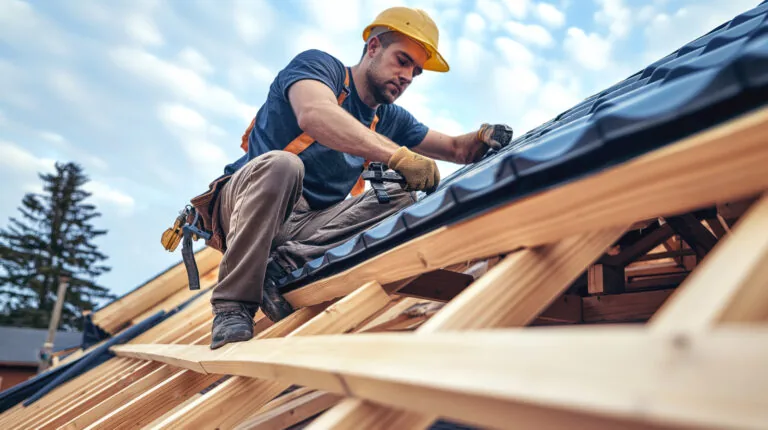
If your home needs a new roof, installation quality matters as much as the materials. A proper Roof installation should include careful tear-off, deck inspection, underlayment, flashing, drip edge, starter shingles, ridge caps, ventilation, and cleanup.
Each layer has a purpose. Shingles protect the surface. Underlayment adds secondary moisture protection. Flashing protects roof transitions. Ventilation helps control attic heat and moisture.
Shortcuts during installation can create future leaks
Poor flashing, incorrect nail placement, weak ventilation, or skipped roof edge details can cause problems later. A new roof should not only look clean from the street. It should be installed as a complete weather protection system.
Before approving the project, ask how these details will be handled.
Storm damage should be checked before it turns into a leak
Homer Glen and Frankfort homeowners should take storm damage seriously. Hail can bruise shingles and knock away protective granules. Wind can lift shingles and loosen roof edges. Heavy rain can expose weak flashing and clogged drainage areas.
Some storm damage is not visible from the ground. A roof can be damaged without leaking immediately. That is why inspection after severe weather is important.
Homeowners can look for warning signs after storms
After a storm, check your property safely from the ground. Look for shingles in the yard, roof debris, dented gutters, damaged vents, granules near downspouts, broken branches, or water stains indoors.
If you notice these signs, schedule a professional inspection before the next storm makes the damage worse.
South suburban Chicago roofing requires strong drainage and ventilation
The south suburban Chicago roofing environment brings a mix of weather conditions that can stress a roof throughout the year. Heavy rain needs clear gutters and downspouts. Snow and ice need strong roof edge protection. Summer heat needs proper attic ventilation.
A roof with poor drainage or blocked airflow may age faster than expected. Shingles can curl, decking can hold moisture, and insulation can become less effective.
Gutters and attic airflow should be part of the inspection
A roofer should check whether gutters are clogged, sagging, leaking, or pulling away from the fascia. They should also look at soffit vents, ridge vents, attic moisture, and signs of poor airflow.
These details can affect how long your roof lasts.
Material choice should match the home and local weather
Most Homer Glen and Frankfort homeowners choose asphalt shingles because they are practical, attractive, and widely used in Illinois. Architectural shingles are often preferred because they are thicker and offer a stronger appearance than basic three-tab shingles.
Metal roofing, synthetic roofing, and specialty materials may also be options for some homes. The right material depends on roof slope, budget, home style, and long-term goals.
The right material should fit more than the budget
A low-cost material may not always provide the best long-term value. Homeowners should compare durability, appearance, warranty, maintenance needs, and weather performance.
A good contractor will explain which options make sense for your specific roof.
Warranties should be explained before the work starts
Roof warranties can include manufacturer coverage and workmanship coverage. Manufacturer warranties usually apply to the roofing material. Workmanship warranties apply to the installation.
Both are important. Good shingles can still fail if installed poorly. Good workmanship can still be affected if the wrong material is chosen for the roof design.
Warranty details should be written clearly
Ask what is covered, how long coverage lasts, what is excluded, and what could void the warranty. Ventilation, installation method, and product selection can all affect warranty protection.
Do not rely only on verbal promises.
Cleanup and property protection should be part of the roofing plan
Roofing work can create noise, nails, old shingles, dust, and debris. A professional crew should protect siding, landscaping, driveways, windows, and outdoor living areas as much as possible.
Cleanup should include removing old materials, checking for nails, clearing debris, and leaving the property safe.
Good cleanup shows good project management
Homeowners with children, pets, gardens, or outdoor seating areas should ask how the contractor handles property protection and cleanup.
A quality roofing company should treat the home with care from start to finish.
Red flags can help homeowners avoid the wrong roofer
Some warning signs should make homeowners pause. Be careful if a contractor pressures you to sign immediately, avoids written estimates, refuses to show insurance proof, gives vague warranty answers, or asks for an unusually large upfront payment.
Also be cautious after major storms. Some out-of-area contractors may appear quickly after hail or wind events and then leave once the busy season ends.
A professional roofer should not rush your decision
A good contractor gives you time to review the estimate and ask questions. They explain the project clearly and do not pressure you with fear-based claims.
Your roof is too important for rushed decisions.
Local homeowners should plan inspections before problems become emergencies
Many roofing emergencies can be reduced with earlier inspection and maintenance. A roof that is checked before storm season or winter has a better chance of avoiding sudden leaks.
Regular inspections can catch loose shingles, minor flashing issues, clogged gutters, weak pipe boots, and early ventilation problems before they become expensive repairs.
Preventive care helps protect your budget
Waiting until water enters the home can increase repair costs. By that time, moisture may have reached insulation, drywall, roof decking, or framing.
Early inspection gives homeowners more control over timing, budget, and repair options.
Conclusion
Choosing trusted roofing Homer Glen Frankfort IL services means looking beyond the lowest estimate. Homeowners should choose a contractor with local experience, proper qualifications, clear communication, strong reviews, detailed estimates, fair warranties, and a complete installation process.
Whether your home needs repair, replacement, storm damage inspection, or preventive maintenance, the right roofer should explain the problem clearly and recommend a solution based on the actual roof condition. Taking time to choose carefully can protect your home, budget, and peace of mind.
Call Clearway Exteriors today at (866) 328-1110 to schedule a roof inspection or speak with a roofing professional about your roofing needs in Homer Glen, Frankfort, Tinley Park, and nearby Illinois communities. Visit us at 18521 Spring Creek Drive Unit B, Tinley Park, IL 60477.
Homer Glen and Frankfort Roofing FAQs
What is roof underlayment?
Roof underlayment is the protective layer installed between the roof deck and the outer roofing material. It helps protect the deck from moisture if water gets beneath shingles or other roof coverings.
Why is roof underlayment important?
Roof underlayment is important because it adds a secondary layer of protection against wind-driven rain, snow melt, leaks, and moisture that may reach beneath the visible roofing material.
Is synthetic roof underlayment better than felt?
Synthetic roof underlayment often provides stronger tear resistance, lighter handling, and improved installation performance, while felt may be used for more basic or budget-focused roofing projects.
When is roof underlayment replaced?
Roof underlayment is usually replaced during a full roof replacement, after major storm damage, or when leaks and aging materials show that the roofing system needs deeper repair.
Does roof underlayment stop leaks?
Roof underlayment can help reduce moisture entry if water gets beneath shingles, but it is not a permanent leak solution. Shingles, flashing, ventilation, and installation details must also be correct.