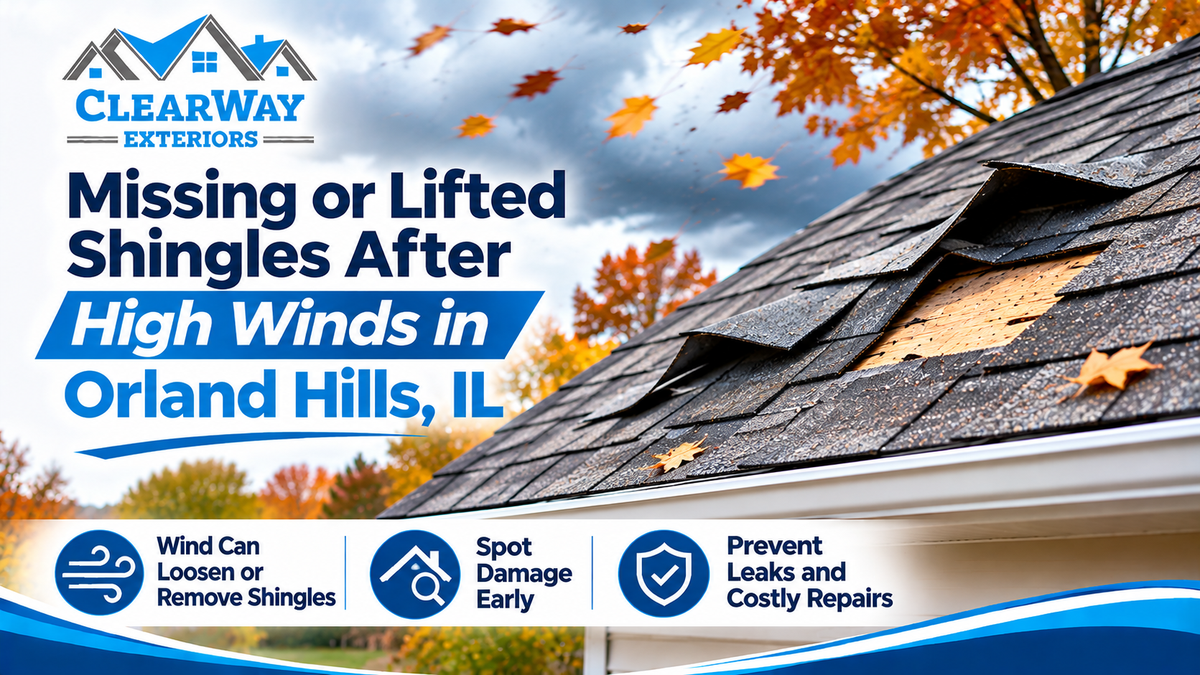
A powerful windstorm can damage a roof without leaving obvious signs inside the house. Shingles may lift along their edges, lose their adhesive seal, or disappear entirely when strong gusts move across the roof. Understanding wind-damaged shingles Orland Hills, IL, homeowners commonly encounter this important issue because even a small exposed section can become a leak during the next rainfall.
Throughout Orland Hills, residential roofs face changing weather conditions, including thunderstorms, strong winds, snowfall, and repeated freezing temperatures. These conditions gradually affect roofing materials, especially when shingles have already experienced years of sunlight and moisture exposure.
After a storm, homeowners may discover roofing debris in the yard or notice an uneven section near the ridge. Others see nothing unusual until a ceiling stain appears weeks later. Both situations deserve attention because roofing damage is not always visible from the driveway.
Clearway Exteriors provides roofing inspections, shingle repairs, and exterior restoration services throughout Orland Hills and surrounding Chicagoland communities. This guide explains how high winds damage shingles, what homeowners should check after storms, and when professional repairs or replacement become necessary.
Why high winds can lift or remove asphalt shingles
Asphalt shingles depend on several components to remain securely attached. Roofing nails hold the materials against the deck, while factory-applied adhesive strips help adjacent shingles resist wind uplift.
When strong gusts move across a roof, changing air pressure can pull against exposed shingle edges. If the adhesive bond has weakened or the materials were installed incorrectly, individual shingles may begin lifting.
Aging shingles become more vulnerable to wind pressure
Years of exposure can reduce shingle flexibility and affect adhesive performance. Older materials may become brittle, particularly after repeated temperature changes.
A shingle that has already curled or cracked requires less additional stress to become damaged during a storm.
Installation problems can contribute to shingle failure
Incorrect nail placement, insufficient fastening, or incompatible roofing components may reduce wind resistance.
Poorly secured starter shingles along the eaves can also create vulnerable areas where wind begins lifting the roofing surface.
Missing shingles and lifted shingles create different problems
Although both conditions result from wind exposure, they do not always require the same repair approach.
A missing shingle leaves part of the underlying roofing system exposed. A lifted shingle may remain in position but lose the secure attachment needed to resist future storms.
Missing shingles expose vulnerable roofing layers
Homeowners searching for information about missing shingles after storm conditions should understand that exposed underlayment is not intended to serve as permanent weather protection.
Rain can reach fastening points, seams, and damaged areas beneath the missing material.
Lifted shingles can allow moisture beneath the surface
Even when a shingle remains attached, a broken adhesive seal can allow wind-driven rain to reach lower roofing layers.
Repeated movement may also create creases that weaken the shingle structure.
Why lifted shingles should not simply be pressed back down
Pressing a damaged shingle into place does not necessarily restore its original adhesive bond.
A professional must examine the material for cracking, creasing, and fastening damage before determining whether resealing or replacement is appropriate.
How to recognize wind-damaged shingles from the ground
Following severe weather, homeowners should inspect the property only after conditions are safe.
Walking around the house can reveal missing materials, unusual roof patterns, or debris that suggests roofing damage. Avoid climbing onto the roof because loose shingles and wet surfaces create fall hazards.
Common warning signs include
- Missing shingles or roofing fragments in the yard
- Shingle edges visibly lifted above surrounding materials
- Crooked or uneven sections near roof ridges
- Exposed underlayment or darker patches on roof slopes
- New ceiling stains following heavy rainfall
These observations help identify potential problems but cannot establish the complete extent of damage.
Granules near downspouts may provide additional clues
Wind-driven debris can scrape roofing surfaces and dislodge protective granules.
However, granule loss also occurs as shingles age. A professional inspection helps determine whether the condition is related to storm damage or ordinary deterioration.
Roof edges and ridges are especially vulnerable during windstorms
Wind pressure changes as air moves over roof slopes, around corners, and across ridgelines.
Certain roof areas experience greater uplift forces, making correct fastening and material installation particularly important.
Ridge caps can loosen during strong gusts
Ridge cap shingles protect the upper connection between adjoining roof slopes.
When ridge materials become loose or missing, rain may reach vulnerable seams beneath them.
Starter shingles protect the lower roof edges
Starter materials help secure the first row of shingles and support proper water shedding.
If starter shingles fail, wind can begin lifting the overlying roofing materials along the eaves.
Roof corners deserve closer inspection.
Roof corners experience changing wind pressure from different directions.
Damage in these locations may extend beyond the first visibly displaced shingle, making a complete inspection worthwhile.
Hidden wind damage may not cause an immediate roof leak
A roof can appear dry inside the house even after shingles have lost their adhesive seals.
Water entry depends on rainfall intensity, wind direction, the condition of the underlying materials, and the location of the damage.
Small openings may become more serious during later storms.
An unsecured shingle can move repeatedly whenever strong winds return.
This movement may enlarge existing cracks or expose fasteners that were previously protected.
Water can travel before becoming visible indoors.
Moisture entering near the ridge may move along decking or framing before reaching a ceiling.
Consequently, an interior stain does not always reveal where the original roofing damage occurred.
A professional roof inspection identifies the full damage pattern
Storm damage inspections should cover accessible roof slopes, ridges, valleys, flashing, and roof penetrations.
The goal is to determine whether the damage is limited to a few shingles or affects larger sections of the roofing system.
A roofing contractor can distinguish wind damage from aging
An experienced roofing contractor evaluates shingle creasing, adhesive separation, fastening conditions, and surrounding wear.
This distinction matters because a roof may have both storm-related damage and existing deterioration.
Photographs help homeowners understand repair recommendations.
Close-up images can show damaged shingles that are difficult to identify from ground level.
A written explanation should identify the affected roof sections and describe the recommended work without relying on unclear estimates.
How is lifted shingle repair typically completed
Professional lifted shingles repair begins with evaluating the condition of the affected materials.
Some shingles may remain structurally sound but have lost their adhesive bond. Others develop cracks or creases that make replacement necessary.
Repair methods depend on the manufacturer’s requirements
Suitable roofing adhesives or sealing procedures may be appropriate in limited circumstances when permitted by the product manufacturer.
Damaged or permanently creased shingles generally require replacement rather than simple resealing.
Surrounding shingles should also be inspected
Wind can affect several adjacent shingles even when only one appears visibly lifted.
A repair should address the complete affected section to reduce the chance of another failure during the next storm.
Missing shingle replacement requires careful material matching
Replacing missing shingles involves more than covering an exposed opening.
The installer must examine the underlayment, adjacent shingles, fastening points, and any damage caused when the original material separated.
Matching the original shingle can be challenging
Roofing products vary in thickness, color, profile, and manufacturing design.
An older shingle color may no longer be available, and new materials may appear different from roofing that has faded over time.
Underlying damage should be addressed before replacement
If wind or moisture damaged the underlayment, the affected protective layer may also require repair.
Installing replacement shingles over compromised materials can leave the roof vulnerable to recurring leaks.
GAF shingle repair should follow product-specific installation requirements
Homeowners with GAF roofing systems may want replacement materials that match their existing shingles.
A professional GAF shingle repair should account for the specific shingle product, fastening requirements, adhesive details, and applicable manufacturer guidance.
Product compatibility matters during repairs
Not every GAF shingle uses identical installation details or has the same wind resistance characteristics.
The contractor should identify the existing product whenever possible before choosing replacement materials.
Warranty coverage should be reviewed carefully
Roofing warranties may contain conditions related to installation, maintenance, and damage caused by severe weather.
Homeowners should review their documentation rather than assuming that every wind-related repair qualifies for manufacturer coverage.
When isolated repairs are enough to restore roof protection
A few damaged shingles do not automatically mean the entire roof must be replaced.
Localized damage may be repairable when surrounding materials remain flexible, securely attached, and otherwise functional.
Roof-repair services address specific damaged sections
Professional Roof-repair work can involve removing damaged shingles, restoring underlayment, securing replacement materials, and checking nearby flashing.
The repair should restore the intended water-shedding function of the affected area.
Existing roof condition influences repair feasibility
If nearby shingles are brittle or deteriorated, removing damaged materials may disturb adjacent sections.
A contractor should explain these limitations before recommending isolated repairs.
Widespread shingle damage may require roof replacement
Some windstorms affect multiple slopes or large sections of a roof.
When damage is extensive, replacement may provide a more dependable solution than repairing numerous scattered areas.
Roof installation involves a complete protective system
During Roof installation, contractors should evaluate roof decking, underlayment, flashing, drip edges, ventilation, and compatible shingles.
Correct fastening and installation procedures are particularly important in areas exposed to strong winds.
Replacement decisions should consider long-term performance
Roof age, material condition, prior repairs, and the extent of storm damage all influence the recommendation.
Homeowners should receive a clear written explanation before approving a full replacement project.
What homeowners should do immediately after discovering missing shingles
Timely action helps limit additional moisture exposure when roofing materials have been displaced.
Start by documenting visible damage from the ground and arranging a professional assessment.
A simple post-storm checklist helps organize the next steps
- Photograph missing shingles and visible roof damage
- Record the approximate date of the storm
- Check ceilings and accessible attic areas for moisture
- Keep roofing debris and repair documents when practical
- Schedule a professional inspection before further storms
These steps support repair planning without exposing homeowners to dangerous roof access.
Active leaks may require temporary protection
If missing materials allow significant water entry, temporary weather protection may be necessary.
Professional tarping can help limit additional exposure until permanent repairs are completed.
Wind damage can also affect gutters, flashing, and soffits
A storm powerful enough to remove shingles may also loosen nearby exterior components.
Gutters can pull away from fascia, metal flashing may shift, and soffit panels can become detached.
Drainage problems can worsen existing roofing damage
Loose gutters may allow water to overflow behind fascia boards or collect near roof edges.
Correcting connected drainage problems helps protect completed shingle repairs.
Soffit damage may expose ventilation openings
Displaced soffit panels can leave gaps around roof overhangs.
These openings may allow wind-driven moisture or pests into vulnerable exterior spaces, requiring attention alongside roofing repairs.
How winter weather can make wind-damaged shingles worse
Orland Hills roofs must handle changing temperatures after autumn windstorms.
Snow and ice can conceal displaced shingles, while melting snow may reach openings created during earlier storms.
Freezing temperatures can complicate existing damage
Water entering small gaps may freeze and place additional stress on vulnerable roofing connections.
Weather conditions can also affect roofing adhesive performance and suitable repair procedures.
Early inspections reduce winter uncertainty
Identifying damage before prolonged snowfall gives homeowners more time to review findings and arrange appropriate repairs.
Waiting until an interior leak develops may increase the scope of restoration work.
Insurance documentation should accurately describe wind damage
Homeowners insurance may cover certain sudden wind-related roofing losses, depending on policy conditions.
Clear photographs and professional inspection findings provide useful records when a claim is being considered.
Contractors document damage while insurers determine coverage
A roofing professional can identify affected materials and provide repair estimates.
The insurance company evaluates coverage according to the policy, deductible, exclusions, and adjuster’s findings.
Organized records help throughout the process
Keep photographs, inspection notes, written estimates, and insurance correspondence together.
Avoid authorizing work based on assumptions about claim approval or payment.
How Orland Hills homeowners can reduce future shingle damage risks
No roofing system can prevent every type of storm damage. However, routine maintenance helps identify weakened materials before severe weather arrives.
Inspection frequency should reflect roof age, previous storm exposure, and visible deterioration.
Regular maintenance supports better shingle performance
Loose flashing, damaged ridge caps, and deteriorating roof edges should be corrected before strong winds return.
Nearby tree branches may also require attention when they contact or scrape roofing materials.
Proper installation remains essential for wind resistance
Fastening patterns, starter materials, roof slope, and manufacturer requirements all influence roofing performance.
Choosing suitable materials and qualified installation professionals helps create a more reliable roof system.
Conclusion
Recognizing wind damaged shingles Orland Hills IL homeowners experience after severe weather is important for preventing further roof deterioration. Missing shingles expose vulnerable roofing layers, while lifted shingles can allow wind-driven rain beneath the surface even when the materials remain attached.
A professional inspection helps identify the affected sections and determine whether resealing, targeted shingle replacement, or full roof replacement is appropriate.
Clearway Exteriors provides roof inspections, shingle repairs, replacement, and storm restoration services throughout Orland Hills and nearby Chicagoland communities. Call (866) 328-1110 to schedule a roof inspection or discuss wind damage repair options.
Wind-Damaged Shingles Repair FAQs
How can I tell if wind damaged my roof shingles?
Wind-damaged shingles may appear lifted, creased, cracked, loose, or completely missing. Roofing debris in the yard, exposed underlayment, and damaged ridge caps can also indicate wind damage. A professional inspection can identify less visible problems.
Can lifted shingles be repaired without replacing the roof?
Yes. Some lifted shingles can be repaired when the material remains sound and the manufacturer’s repair requirements allow it. Permanently creased, cracked, or severely damaged shingles generally require replacement.
Will missing shingles cause a roof leak?
Missing shingles expose underlying roofing materials to rain and wind. Although a leak may not appear immediately, repeated moisture exposure can increase the risk of water reaching the roof deck and interior spaces.
Can GAF shingles be repaired after wind damage?
GAF shingles can often be repaired or replaced when suitable matching products are available and the surrounding roofing materials remain in good condition. Repairs should follow the applicable manufacturer’s installation and compatibility requirements.
When should I schedule a roof inspection after high winds in Orland Hills?
Schedule an inspection after significant windstorms if you notice missing shingles, lifted edges, roofing debris, damaged flashing, ceiling stains, or other visible changes. Early inspection helps identify damage before additional storms worsen the condition.