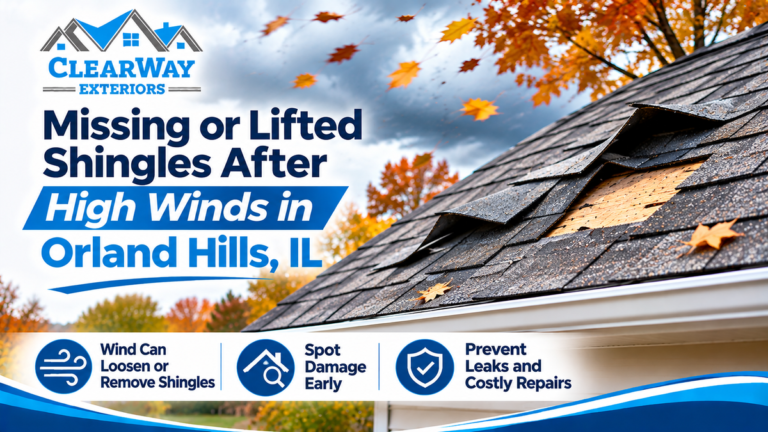

Your roof might have survived the summer without a noticeable leak, but that does not mean every part of it is prepared for winter. A loose shingle, cracked vent seal, or damaged roof edge can remain unnoticed until melting snow finds its way beneath the roofing materials. Scheduling a free roof inspection Orland Hills IL homeowners can arrange before freezing weather arrives, which helps identify these concerns while repairs are easier to plan.
Orland Hills experiences cold temperatures, snowfall, strong winds, and repeated freezing and thawing throughout winter. Residential roofs must manage moisture, maintain proper drainage, and resist weather exposure through the season. Existing weaknesses can become more troublesome when snow collects around valleys or ice forms near the eaves.
Many homeowners focus on heating systems and window insulation when preparing for winter. However, roof condition is equally important because the roofing system protects attic insulation, ceilings, framing, and interior living spaces from outdoor moisture.
Clearway Exteriors provides free roofing inspections for homeowners throughout Orland Hills and nearby Chicagoland communities. This guide explains what an inspection covers, which warning signs deserve attention, and how homeowners can prepare their roofing systems for the colder months.
Why a free roof inspection matters before winter arrives
Winter roofing problems rarely begin with a dramatic failure. A small opening around a pipe boot or damaged flashing connection may allow moisture to enter slowly before any interior stain appears.
Autumn provides an opportunity to identify these issues before snow covers roofing surfaces and makes access more difficult.
Earlier storms may have weakened roofing materials.
Summer thunderstorms can loosen shingles, damage flashing, and leave impact marks that are difficult to identify from the ground.
Even when the roof looks normal afterward, some components may have lost their original weather resistance.
A preventive inspection gives homeowners time to plan.
Discovering a repair need before winter allows time to review the findings, discuss materials, and schedule suitable work.
By comparison, an active leak during freezing weather may require urgent temporary protection before permanent repairs become possible.
What happens during a professional roof inspection in Orland Hills?
A professional inspection begins with understanding the property’s roofing history and any concerns the homeowner has noticed.
The inspector evaluates accessible roofing surfaces and associated components using appropriate safety procedures. Roof slope, weather conditions, and access limitations determine which areas can be examined directly.
The roof surface is checked for visible deterioration.
Asphalt shingles are reviewed for cracking, curling, missing sections, exposed fasteners, and excessive granule loss.
Changes in shingle alignment may indicate previous wind exposure or fastening problems.
Vulnerable openings and roof connections are examined.
Chimneys, skylights, vents, and wall intersections require flashing to direct water away from the roofing assembly.
An inspection identifies visible separation, damaged sealants, and other conditions that may increase leak risks.
Findings should be explained in understandable language.
Homeowners benefit from photographs and clear descriptions rather than technical terms without context.
A useful inspection explains what was observed, why the issue matters, and whether further evaluation or repair is necessary.
Shingle condition is one of the first winter readiness checks.
Shingles are the primary weather-shedding surface on many Orland Hills homes. Their condition influences how effectively rain and melting snow move toward gutters and drainage areas.
Over time, exposure to sunlight, wind, and temperature changes affects their flexibility and appearance.
Missing shingles can leave underlying materials exposed.
When shingles separate from the roof, the underlayment becomes more vulnerable to prolonged weather exposure.
Although underlayment provides secondary moisture protection, it is not intended to replace the finished roofing surface.
Lifted shingles may look normal from the driveway.
A weakened adhesive seal can allow wind to lift shingle edges without completely removing the material.
The shingle may settle back into place after the storm, hiding damage that becomes more noticeable during a closer inspection.
Repair decisions depend on the surrounding roof condition.
A few isolated damaged shingles may be replaceable. However, brittle surrounding materials or widespread deterioration can complicate localized repairs.
The appropriate recommendation depends on the roof’s actual condition rather than age alone.
Flashing problems can become winter roof leaks.
Roof flashing protects locations where different surfaces meet. These transitions are particularly vulnerable because they interrupt the continuous shingle covering.
During winter, snow can collect around chimneys, vents, and roof intersections before melting into water.
Damaged flashing can allow moisture beneath roofing materials.
Loose metal, open seams, and deteriorated connections may create entry points for water.
Once moisture enters the roofing assembly, it can travel along decking or framing before appearing indoors.
Previous sealant repairs need another look.
Older caulking or patch materials may deteriorate after repeated weather exposure.
A professional inspection determines whether the original connection remains properly protected or requires a more complete repair.
Gutters and downspouts should be reviewed before snowfall.
Gutters are essential for directing roof runoff away from siding, fascia boards, and foundation areas.
Orland Hills homes with nearby trees may experience significant leaf buildup during autumn. Debris can restrict drainage and create standing water inside gutter channels.
Blocked gutters may freeze during cold weather.
When trapped water freezes, additional weight can stress gutter hangers and existing joints.
Overflow may also direct moisture behind fascia boards or onto exterior walls.
Downspout connections affect drainage performance.
Disconnected elbows or blocked outlets can release runoff too close to the building.
Inspectors should identify visible drainage concerns and recommend cleaning or repairs when appropriate.
Roof valleys require attention before snow begins collecting
A valley forms where adjoining roof slopes meet. These areas carry concentrated runoff during rainfall and snow melt.
Leaves, twigs, and roofing debris may settle in valleys, especially around complicated rooflines.
Accumulated debris can conceal damaged materials
A blocked valley may hide deteriorating flashing or damaged shingles beneath the debris.
Removing the obstruction allows water to travel through the intended drainage path and makes the underlying roofing components easier to inspect.
Ice formation may expose existing weaknesses.
Snow melting and refreezing around vulnerable seams can increase moisture exposure.
Appropriate valley materials and clear drainage help protect these important roof transitions.
Roof edges need special protection during winter.
Eaves are often colder than the upper roofing surface. This temperature difference contributes to ice formation when melting snow reaches the roof edge.
If ice accumulates, additional water may back up beneath shingles.
Ice dams can develop even when the roof looks undamaged.
Ice dams are often associated with uneven roof temperatures caused by heat escaping from living spaces into the attic.
The problem involves both roofing details and the conditions beneath the roof deck.
Underlayment provides secondary moisture protection.
Self-adhering ice and water membranes help reduce water intrusion in vulnerable areas when correctly installed.
However, these materials do not eliminate ice formation or replace proper attic insulation and ventilation.
Attic insulation and ventilation affect winter roof readiness.
The condition of the attic influences how the roofing system responds to cold weather.
Warm indoor air entering the attic can increase roof deck temperatures and contribute to uneven snow melting. Moisture carried by that air may also condense on cold surfaces.
Insulation helps limit unwanted heat transfer.
Properly installed insulation reduces heat movement from occupied rooms into the attic.
Thin or uneven insulation may create warmer areas beneath the roof deck.
Ventilation supports moisture management.
Suitable intake and exhaust ventilation helps move air through the attic according to the building’s ventilation design.
Blocked soffit vents or unsuitable airflow arrangements may contribute to trapped moisture.
Moisture stains require careful investigation.
Damp insulation, stained decking, and condensation may indicate roof leakage or indoor moisture problems.
Identifying the actual cause is important before recommending repairs.
Interior warning signs can reveal roofing problems before winter.
Some roof concerns become noticeable indoors before exterior damage can be identified.
Stains near ceilings, peeling paint around upper walls, and damp attic insulation deserve attention, particularly after heavy rainfall.
The location of a stain may not match the leak source.
Water can travel along structural components before reaching a finished ceiling.
A professional assessment considers both the interior symptom and exterior roofing condition.
Recurring moisture problems should not be ignored.
A stain that disappears during dry weather does not necessarily mean the problem has resolved.
Repeated moisture exposure can affect insulation and other concealed building materials.
A free inspection helps determine whether repairs are necessary.
Homeowners sometimes delay inspections because they worry that every visit will lead to a recommendation for complete replacement.
However, roofing conditions vary considerably. Some homes require only routine maintenance, while others have limited damage suitable for targeted repairs.
A roofing contractor should explain the available options
An experienced roofing contractor can identify visible defects and discuss whether maintenance, repair, or replacement is appropriate.
Homeowners comparing a roofing contractor Orland Hills service should look for clear written findings, appropriate credentials, and understandable recommendations.
Roof-repair services can correct localized damage
Professional Roof-repair work may involve replacing damaged shingles, restoring flashing, securing roof edges, or repairing deteriorated pipe boots.
When surrounding roofing materials remain functional, targeted work may restore weather protection without replacing the entire roof.
Roof installation becomes relevant when the roof is widely deteriorated
Extensive shingle failure, recurring leaks, or compromised roofing components may justify a replacement discussion.
The decision should follow an inspection that identifies the scope and condition of the existing system.
Proper installation involves several connected layers
During Roof installation, contractors should review decking condition, underlayment, flashing, roof edge details, and ventilation.
Materials must be compatible and installed according to applicable manufacturer instructions.
Winter scheduling requires suitable conditions
Cold temperatures, snow, and moisture can influence installation methods and safe working conditions.
Planning replacement before prolonged winter weather may provide greater scheduling flexibility.
How a roof inspection supports long-term maintenance planning
An inspection is useful even when no immediate repair is necessary.
Photographs and written observations provide a record of the roof’s condition, helping homeowners recognize changes after future storms.
Routine monitoring helps identify developing wear
Roofing materials age gradually, and small changes may be difficult to notice without comparison.
Regular evaluation can reveal damaged flashing, granule loss, or other conditions before they become larger problems.
Inspection records help with future decisions
Documented roof condition may be useful when planning maintenance, preparing to sell a home, or reviewing damage after severe weather.
These records do not guarantee insurance coverage but provide factual information about the property.
Searching for a roof inspection near me should lead to clear answers
Homeowners entering roof inspection near me into a search engine often have a specific concern.
Some notice missing shingles after strong winds. Others discover water stains or want reassurance before snowfall.
A useful inspection should address those concerns directly rather than offering the same recommendation to every property.
Local roofing experience helps with seasonal concerns
Orland Hills homes experience Midwest temperature changes, wind exposure, and winter drainage challenges.
A contractor familiar with local conditions can explain how roof design and maintenance history affect seasonal performance.
Homeowners can prepare for their inspection without climbing onto the roof
A little preparation helps the inspector understand previous problems and areas of concern.
Gather information about roof age, earlier repairs, and recent storms before the appointment.
Use this simple homeowner checklist
- Photograph visible roof damage from a safe ground location
- Record ceiling stains or recurring moisture problems
- Note previous repairs around chimneys and vents
- Check whether gutters overflow during rainfall
- Make attic access available when inspection is appropriate
These details help focus the assessment without requiring unsafe rooftop work.
Avoid attempting repairs before the roof is evaluated
Walking on damaged shingles or applying temporary sealants without identifying the cause can create additional problems.
Professional evaluation helps determine the appropriate repair method.
Different Orland Hills homes have different inspection needs
Residential properties vary in roof slope, attic design, age, and drainage arrangements.
A smaller ranch home may have broad roof sections, while a two-story property with dormers and valleys contains more roof transitions.
Roof design influences where problems develop
Complex intersections can require additional attention to flashing and drainage.
Homes with mature tree coverage may also experience more gutter and valley debris accumulation.
Previous maintenance changes the roof’s condition
Two houses built during the same period may have very different roofing systems because of past replacement work, storm exposure, and ventilation improvements.
Individual inspection findings provide a stronger basis for recommendations than neighborhood age alone.
Why addressing roof concerns before winter is worthwhile
Snow and ice can make damaged roofing materials more difficult to inspect and repair.
An existing leak may also become more troublesome when melting snow reaches vulnerable roof sections.
Preventive repairs can reduce unnecessary disruption
Replacing damaged shingles or restoring flashing before severe weather helps limit the period during which vulnerable materials remain exposed.
Early planning also allows homeowners to review estimates without the pressure of an active winter leak.
Conclusion
Scheduling a free roof inspection Orland Hills IL homeowners can arrange before winter is a practical way to understand the condition of the roofing system. Shingles, flashing, gutters, roof valleys, attic ventilation, and roof edges all influence how effectively a home handles snow, ice, and changing temperatures.
Professional inspection helps distinguish routine maintenance from necessary repairs and provides homeowners with clearer information before making decisions.
Clearway Exteriors offers roofing inspections, roof repair, replacement, and exterior services throughout Orland Hills and nearby Chicagoland communities. Call (866) 328-1110 to schedule your free roof inspection and discuss winter preparation for your home.
Free Roof Inspection and Winter Readiness FAQs
What does a free roof inspection in Orland Hills include?
A free roof inspection typically includes checking accessible shingles, flashing, roof valleys, gutters, vents, and roof edges. Attic conditions may also be reviewed when access allows and moisture or ventilation concerns are present.
Why should I schedule a roof inspection before winter?
Scheduling a roof inspection before winter helps identify damaged shingles, deteriorated flashing, blocked drainage, and other conditions that may become more troublesome during snow, ice, and freezing temperatures.
Can a roof inspection identify problems before a leak appears?
Yes. A professional inspection can identify visible roofing deterioration, loose materials, flashing problems, and drainage issues before they create noticeable interior leaks. However, not every concealed problem can be identified through a visual inspection.
Does a free roof inspection mean I need to replace my roof?
No. Some inspections reveal that the roof remains in suitable condition and needs no immediate work. Others identify isolated damage that can be repaired or widespread deterioration that may justify replacement.
When should I contact a roofing contractor in Orland Hills?
Contact a roofing contractor after significant wind or hail damage, recurring roof leaks, missing shingles, loose flashing, ceiling stains, or visible roof deterioration. A preventive inspection before winter is also useful for maintenance planning.