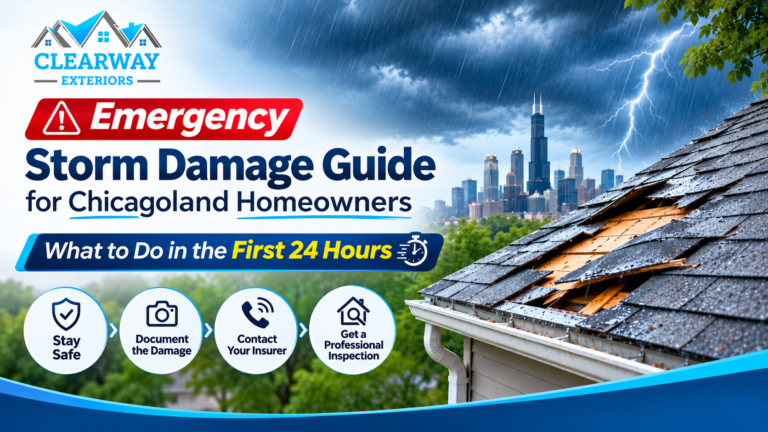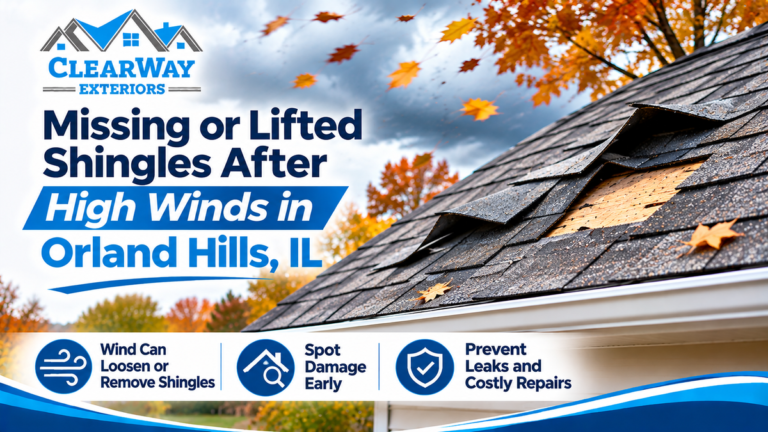
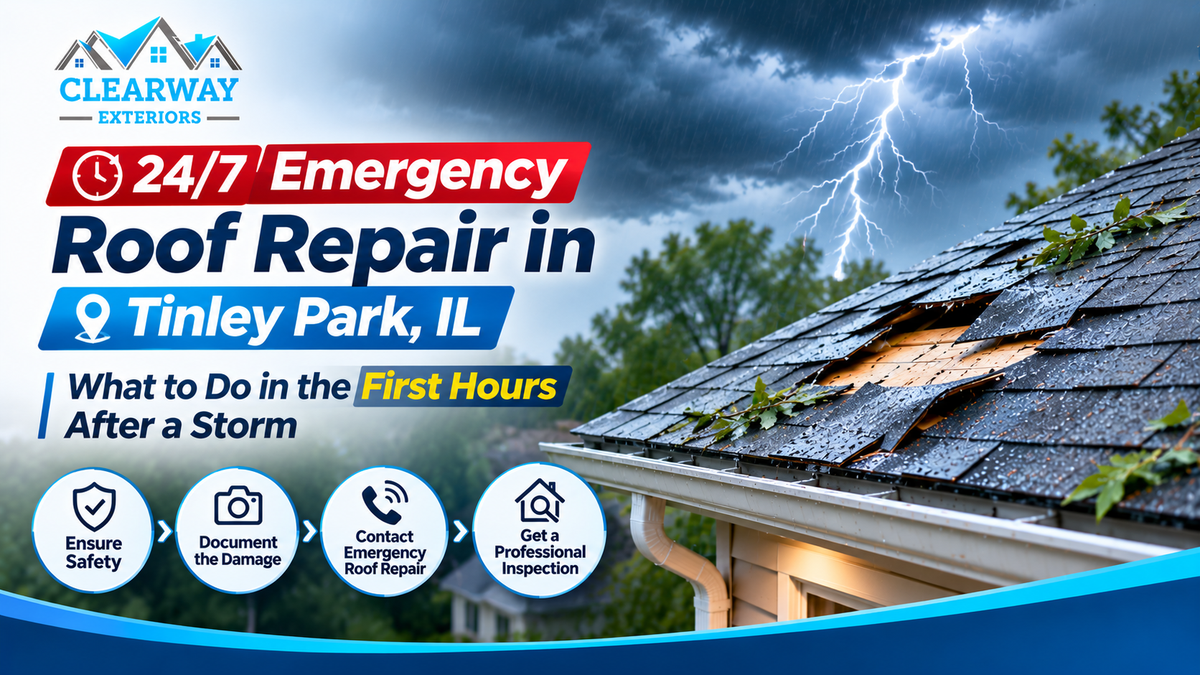
A severe storm can turn a normal evening into a stressful situation when water begins dripping through the ceiling or shingles disappear from the roof. Understanding emergency roof repair Tinley Park IL homeowners may need helps protect the property and prevent further damage while professional assistance is arranged.
Tinley Park experiences thunderstorms, strong winds, hail, heavy rainfall, and winter weather that can damage residential roofing systems. High winds may loosen shingles, flying branches can puncture roof surfaces, and damaged flashing may allow rainwater to enter vulnerable areas.
An emergency does not always mean the entire roof has failed. Sometimes a single damaged roof penetration or missing shingle section creates the problem. However, homeowners should never assume a leak is minor without identifying its source.
Clearway Exteriors provides roofing inspections, storm damage assessments, and repair services throughout Tinley Park and nearby Chicagoland communities. This guide explains what homeowners should do during the first hours after storm damage, when temporary protection becomes necessary, and how permanent repairs restore the roof.
The first hour after a storm should focus on safety
When severe weather passes through Tinley Park, protecting people is more important than inspecting roofing materials.
Damaged branches, broken glass, exposed electrical lines, and unstable building components may create hazards around the property. Wait until the storm has passed and conditions are safe before checking outside.
Stay away from damaged electrical equipment and power lines
Fallen electrical lines must be treated as energized. Keep family members and pets away from affected areas and contact the utility provider or emergency services.
Water reaching electrical outlets, ceiling fixtures, or panels also requires professional attention.
Avoid climbing onto a damaged roof
Wet shingles are slippery, while damaged roof decking may no longer provide reliable support.
Even homeowners comfortable using ladders should leave emergency rooftop inspections to qualified professionals.
Structural warning signs require immediate action
A visibly sagging roof, major ceiling deformation, or unusual structural movement may indicate a serious hazard.
Leave the affected area and seek emergency assistance before attempting cleanup or repairs.
Once conditions are safe, identify visible storm damage
The next step involves checking the exterior from ground level. Walk around the property carefully and look for obvious changes around the roofline.
Missing shingles, damaged gutters, broken vents, and fallen branches can provide useful clues about the storm’s impact.
Common signs of emergency roofing damage include
- Missing or displaced asphalt shingles
- Roofing debris scattered across the yard
- Damaged flashing around chimneys or vents
- Water stains and active ceiling leaks
- Broken branches resting against roofing materials
These observations help determine whether immediate protection or a professional inspection is necessary.
Damage may exist even when no shingles are missing
Wind can weaken adhesive seals without removing shingles completely.
Similarly, hail may damage protective granules or roofing accessories without creating an immediately visible opening.
Protect your home’s interior when water begins leaking
A storm roof leak Tinley Park homeowners discover during heavy rainfall needs prompt attention because moisture can reach insulation, drywall, flooring, and personal belongings.
Move furniture and valuable items away from affected areas when safe. Place containers beneath dripping water to limit damage to surrounding surfaces.
Water stains may not reveal the original leak location
Rainwater can travel along roof decking, rafters, or insulation before appearing on an interior ceiling.
The visible stain may therefore be several feet away from the actual roofing defect.
Wet electrical fixtures create additional hazards
If water enters near lighting, outlets, or electrical equipment, avoid touching the affected components.
A qualified electrician should evaluate electrical concerns before damaged areas are disturbed.
Do not disturb sagging ceiling materials
Ceilings weakened by trapped water may collapse unexpectedly.
Keep people away from the affected area and arrange professional assistance rather than attempting to puncture or dismantle the material.
Temporary roof tarping can help limit additional water entry
Severe storms sometimes expose roofing underlayment or decking by removing shingles or damaging roof penetrations.
In these situations, temporary roof tarping can help protect the exposed section while permanent repairs are planned.
Professional tarping provides short-term weather protection
A suitable tarp can reduce direct exposure to rainfall when installed correctly.
Its placement depends on roof slope, damaged areas, and the condition of surrounding materials.
Temporary coverings do not replace permanent roofing repairs
Strong winds and further storms may loosen temporary protection.
Once the immediate situation is controlled, the damaged roofing components still require evaluation and suitable repair.
Improper tarp installation can create new problems
Driving fasteners through unsuitable areas or securing materials incorrectly can damage shingles and flashing.
Professional installation helps reduce these risks while keeping workers off unsafe roof sections whenever necessary.
Contact a local roofing professional as soon as practical
Once urgent safety concerns are addressed, homeowners should arrange a professional roof assessment.
Searching for an emergency roofer near me often happens when water is entering the home or the roof has visibly damaged sections.
Choose a contractor with appropriate licensing, insurance, experience, and clear repair procedures.
Confirm actual emergency service availability
Homeowners searching for a 24-hour roofer in Tinley Park should contact the provider directly to confirm current response hours and scheduling availability.
A company offering storm restoration services does not automatically operate an overnight emergency crew. Immediate structural or electrical emergencies require the appropriate emergency services.
A roofing contractor should inspect the complete affected area
A qualified roofing contractor examines accessible shingles, flashing, roof penetrations, valleys, and drainage components.
Nearby siding, gutters, soffits, and fascia may also require attention when the storm affected several exterior systems.
Emergency roof inspections identify the actual cause of the leak
Visible roof damage is not always the only source of water intrusion.
A missing shingle may be obvious, but concealed flashing damage or a cracked pipe boot can produce similar interior symptoms.
Wind damage can weaken shingles without removing them
Strong gusts sometimes lift shingles and break their adhesive bonds.
When the material settles back into position, the resulting damage may be difficult to identify from the driveway.
Hail can affect roofing surfaces and metal accessories
Impact marks, granule loss, and dents on vents or flashing may indicate hail exposure.
A professional assessment helps distinguish storm-related problems from ordinary aging and previous deterioration.
Inspection photographs make recommendations easier to understand
Close-up images help homeowners see damaged areas that cannot be safely examined from the ground.
Written findings should explain the condition of the affected materials and identify appropriate repair options.
Professional roof repair may restore isolated damage
Not every emergency requires complete roof replacement.
If damage affects only a few shingles, one flashing connection, or a damaged roof penetration, targeted repair may restore protection.
Roof-repair work should address the source of moisture
Professional Roof-repair services can involve replacing damaged shingles, correcting flashing, repairing pipe boots, or restoring vulnerable roof edges.
The surrounding roofing system should also be evaluated to ensure the repair integrates properly.
Existing roof condition affects repair decisions
A newer roof with localized damage may be suitable for a limited repair.
However, widespread material deterioration or recurring leaks may require a more comprehensive solution.
Roof replacement becomes necessary when damage is extensive
Some storms cause widespread shingle displacement, significant water intrusion, or extensive damage to roof components.
When the existing roofing system cannot be restored reliably through localized repairs, replacement may be recommended.
Roof installation must restore the complete protective assembly
During Roof installation, contractors should examine decking condition and install suitable underlayment, flashing, drip edges, ventilation components, and compatible roofing materials.
The objective is to restore reliable water shedding across the entire affected roof.
Hidden decking damage may change the project scope
Moisture entering beneath roofing materials can affect wood sheathing.
If deterioration is discovered during removal, the contractor should document the condition and explain necessary repairs before continuing.
Storm damage can affect gutters and siding at the same time
Strong winds and flying debris rarely follow the boundaries of individual exterior systems.
A storm that damages shingles may also loosen gutters, crack siding, or displace soffit panels.
Damaged gutters can create additional moisture problems
Bent gutters or disconnected downspouts may direct water behind fascia boards or onto exterior walls.
Restoring drainage helps protect the repaired roofing system and surrounding materials.
Loose siding should be inspected for concealed damage
Wind can pull panels away from their connections and expose vulnerable wall areas.
A complete exterior review helps identify related restoration needs before crews finish the roofing work.
Document storm damage before major repairs begin
Photographs and written records are important after significant weather events.
Begin by recording the approximate storm date and taking pictures of damaged roofing materials from safe locations.
Keep the most important information together
Save:
- Photographs of roof and exterior damage
- Interior leak and water stain images
- Temporary protection invoices
- Professional inspection findings
- Written repair estimates and insurance correspondence
These records help establish a timeline and make repair planning easier.
Documentation should describe actual conditions
Avoid guessing about concealed damage or assuming every worn roofing component was damaged during the storm.
Professional findings provide a clearer basis for restoration decisions.
Understand how insurance fits into emergency roofing repairs
Homeowners insurance may cover certain sudden wind or hail damage, but coverage depends on the policy, deductible, exclusions, and insurer’s findings.
Contact your insurance provider promptly after discovering potentially covered damage and review applicable reporting requirements.
Contractors document damage while insurers decide coverage
A roofing professional can inspect the property, provide photographs, and prepare repair estimates.
The insurance company determines whether the reported damage qualifies for payment under the policy.
Emergency protection expenses should be recorded
If temporary measures are necessary to prevent further damage, keep receipts and descriptions of the work.
Whether those expenses are reimbursable depends on the insurance agreement and claim assessment.
Avoid rushed decisions when choosing an emergency roofer
Storm emergencies create pressure to resolve damage quickly, but homeowners should still review contractor qualifications and proposed work.
Unclear pricing, verbal promises, and unrealistic insurance guarantees can create problems after the initial repair.
Written estimates should explain what is included
A professional estimate identifies affected materials, repair procedures, labor, cleanup, and relevant warranty details.
Homeowners should also understand how concealed damage will be handled if discovered during restoration.
Do not assume the lowest quote provides the best repair
A low estimate may omit flashing, underlayment, or necessary repairs to adjacent components.
Comparing the actual project scope is more useful than comparing only total prices.
Tinley Park roof designs influence emergency repair needs
Homes throughout Tinley Park include ranches, split levels, raised ranches, and larger two-story properties.
Different roof slopes, valleys, chimneys, and attached garages influence where storm damage occurs and how repairs should be planned.
Complex rooflines have additional leak-prone connections
Dormers, valleys, skylights, and wall intersections require careful flashing details.
These areas should receive attention during storm damage inspections because water can enter through small openings.
Mature trees can increase debris impact risks
Branches may scrape shingles or fall onto roof surfaces during strong winds.
Qualified tree professionals should handle large damaged limbs, particularly when they rest against roofing materials or power lines.
What homeowners should do during the next several hours
Once immediate hazards are addressed and a roofing inspection has been arranged, focus on protecting belongings and organizing the repair process.
Avoid unnecessary roof access and continue monitoring interior areas for water intrusion.
Keep a clear record of changing conditions
Additional rainfall may reveal leaks that were not visible immediately after the storm.
Photograph newly discovered damage and share the information with the contractor or insurer when appropriate.
Confirm the next steps with the contractor
Ask whether temporary protection is needed, when a detailed estimate will be available, and what conditions could affect permanent repairs.
Clear communication reduces confusion during an already stressful situation.
Preventive maintenance can reduce future emergency roofing risks
Although homeowners cannot prevent severe weather, regular maintenance helps identify vulnerable roof components.
Keeping gutters clear, repairing loose flashing, and monitoring aging shingles can reduce avoidable moisture problems.
Seasonal inspections help identify developing weaknesses
An inspection before winter or after significant storms may reveal damaged materials before another weather event makes them worse.
Older roofs and properties with previous storm damage may benefit from closer attention.
Proper installation supports long-term weather resistance
Compatible materials, suitable fastening, effective flashing, and drainage details all influence roofing performance.
A well-maintained system is better positioned to handle ordinary seasonal weather exposure.
Conclusion
Knowing what to do during the first hours after severe weather helps homeowners protect their property and make more informed repair decisions.
Effective emergency roof repair Tinley Park IL homeowners need begins with personal safety, safe documentation, temporary protection when necessary, and a professional inspection to identify the actual damage.
Whether the roof requires a few replacement shingles, flashing repairs, or a complete replacement, the recommended work should address the underlying problem rather than simply hiding visible symptoms.
Clearway Exteriors provides roofing inspections, storm restoration, roof repair, and replacement services throughout Tinley Park and nearby Chicagoland communities.
Call Clearway Exteriors at (866) 328-1110 to discuss storm damage, request an inspection, and confirm available emergency roofing assistance.
Emergency Roof Repair FAQs
What should I do first if my roof starts leaking during a storm?
Move people and belongings away from the affected area when safe, place containers beneath dripping water, and avoid electrical hazards. Do not climb onto the roof during severe weather. Contact a qualified roofing professional once conditions permit.
Can I get 24-hour emergency roof repair in Tinley Park?
Emergency roofing availability varies by contractor. Homeowners searching for 24-hour service should contact local providers directly to confirm current response hours, temporary protection options, and scheduling availability.
When is emergency roof tarping necessary?
Temporary roof tarping may be needed when missing shingles, damaged roof sections, or exposed decking allow rainwater to enter the property. Professional tarping helps limit further exposure until permanent repairs can be completed.
Does emergency storm damage always require a new roof?
No. Isolated damage involving shingles, flashing, or roof penetrations may be repaired. Widespread damage, compromised decking, or extensive material deterioration may require roof replacement after a professional inspection.
Will homeowners insurance pay for emergency roof repairs?
Homeowners insurance may cover certain sudden storm-related roof damage depending on the policy, deductible, exclusions, and insurer’s findings. Keep photographs and repair records, and contact your insurer to understand the applicable coverage and reporting requirements.