Winter roofing problems can start quietly. A roof may look fine from the street, but snow, attic heat, clogged gutters, and weak roof edges can work together to create leaks that appear only after freezing weather arrives. That is why ice dam prevention tinley park il homeowners before winter is so important for protecting the roof, attic, ceilings, insulation, siding, and gutters.
An ice dam forms when snow melts on a warmer section of the roof and then refreezes near the colder roof edge. As the ice builds, more melting snow can back up behind it. That trapped water can move under shingles, reach the underlayment, and eventually enter the home. A small winter stain on the ceiling can be the first sign of a larger roof and attic issue.
Tinley Park homes face freezing temperatures, snow, wind, and repeated thaw cycles through the winter season. Older ranch homes, split levels, raised ranches, and newer two-story homes can all develop ice dam problems if heat escapes into the attic or if drainage is blocked. This guide explains why ice dams form, how winter roof leaks happen, and what homeowners can do before the season becomes severe.
Why ice dams become a problem for Tinley Park roofs
Ice dams are not only caused by snow. They usually happen because the roof surface is warmer in some areas and colder near the eaves. Heat escaping from the living space can warm the attic and roof deck. Snow melts over that warmer area and runs downward. When the water reaches the colder edge of the roof, it freezes again.
Over time, that ice ridge grows. Once enough ice builds up, water has nowhere to go. Instead of flowing into the gutter, it can back up beneath shingles and reach roof layers that are not designed to stay wet.
Winter roof leaks often begin before water appears indoors
A homeowner may not notice the problem until a ceiling stain appears, but the leak may have started earlier. Water can move through the roof deck, insulation, rafters, drywall, and wall cavities before it becomes visible.
This is why prevention matters. By the time an interior stain appears, moisture may already be affecting hidden areas.
Ice dams are a roof and attic problem together
Many homeowners think ice dams are only a roofing problem, but the attic plays a major role. If warm indoor air leaks into the attic, it can heat the underside of the roof deck. Poor insulation, air leaks, blocked vents, and weak attic ventilation can all contribute to uneven roof temperatures.
A roof can have good shingles and still experience ice dams if the attic is not working properly. The roof and attic must perform together.
Heat loss can create the conditions for ice buildup
Warm air rises. If gaps around light fixtures, bathroom fans, attic hatches, ductwork, or wall openings allow heated air into the attic, snow can melt from underneath. That meltwater then refreezes at the roof edge.
This is why ice dam prevention should include both exterior roof inspection and attic review.
Attic insulation helps reduce winter roof problems
Proper insulation helps keep heated air inside the living space instead of warming the attic. For homeowners researching attic insulation in Tinley Park, the goal is not only comfort. It is also roof protection.
When attic insulation is thin, uneven, compressed, or missing in certain areas, heat can rise toward the roof deck. This can create warm roof sections that melt snow faster than colder eaves.
Insulation should work with air sealing and ventilation
Insulation alone does not solve every ice dam problem. Air leaks must also be reduced, and ventilation must allow the attic to stay closer to the outdoor temperature. If insulation blocks soffit vents, airflow may be reduced and moisture problems can develop.
A professional inspection can help determine whether attic insulation, air sealing, or ventilation is contributing to ice dams.
Ventilation keeps the attic and roof deck more balanced
Attic ventilation helps move air through the attic. Intake vents usually bring air in through the soffits, while exhaust vents allow air to leave near the ridge or upper roof area. When this system works properly, the attic is less likely to hold trapped heat and moisture.
Poor ventilation can allow warm air to sit under the roof deck. In winter, that heat contributes to uneven snow melt. In summer, it can shorten shingle life and increase attic temperatures.
Blocked soffit vents can make ice dams worse
Insulation, debris, or poor construction can block soffit vents. When intake air cannot enter, the attic cannot ventilate properly. Even a roof with ridge vents may not perform well if the intake side is blocked.
Tinley Park homeowners preparing for winter should have both intake and exhaust ventilation checked.
Gutters and roof edges need attention before snow arrives
Gutters do not cause every ice dam, but clogged or poorly draining gutters can make winter roof edge problems worse. Leaves, twigs, shingle granules, and debris can hold water near the eaves. Once temperatures drop, that trapped water can freeze and add weight to the gutter system.
Sagging gutters can also prevent water from draining away properly. If the gutter is already loose before winter, ice buildup can pull it farther away from the fascia.
Fall gutter cleaning supports winter roof protection
Before winter, gutters and downspouts should be cleared. Downspouts should move water away from the foundation. Roof valleys should also be checked for debris because valleys carry heavy water flow during snow melt.
Keeping drainage areas open helps reduce the amount of water that freezes near the roof edge.
Roof edges and eaves are common leak points in winter
The roof edge is one of the most vulnerable areas during freezing weather. Snow melt naturally moves downward, and eaves are colder than higher roof sections. If ice builds there, water can back up beneath shingles.
A properly installed roofing system includes underlayment, drip edge, starter shingles, flashing, and often ice and water protection in vulnerable areas. These details help protect the roof deck if water moves where it should not.
Ice and water protection adds a layer of defense
Ice and water protection is a self-adhering membrane installed beneath shingles in areas that need extra moisture resistance. It is often used along eaves, valleys, and around roof penetrations.
This layer does not prevent ice dams from forming, but it can help reduce the chance of water reaching the roof deck when backup occurs.
Winter roof leaks in Illinois can come from several sources
Not every winter leak is caused by an ice dam. Winter roof leaks illinois homeowners notice may also come from damaged flashing, cracked pipe boots, missing shingles, failing skylight seals, clogged gutters, poor attic ventilation, or wind-driven snow.
This is why a professional inspection is important. The visible water stain may not reveal the exact source. Water can travel before it appears indoors.
Guessing at the cause can lead to the wrong repair
If a homeowner assumes every winter leak is an ice dam, the real issue may go unfixed. A leak around a chimney, vent, or wall intersection may need flashing repair. A leak near a roof edge may involve ice backup. Attic moisture may come from condensation rather than an outside roof leak.
A careful inspection helps separate these causes.
A roof inspection before winter can prevent emergency leaks
Fall is the best time to check the roof before winter weather arrives. A roofing contractor can inspect shingles, flashing, gutters, roof valleys, attic ventilation, soffit vents, fascia, and roof edges. This gives homeowners a chance to fix weak areas before snow and ice make work harder.
The inspection should look for missing shingles, loose flashing, cracked pipe boots, clogged valleys, sagging gutters, soft fascia, attic moisture, and ventilation problems.
Preventive work is easier than emergency winter service
Winter roof work can be limited by snow, ice, wind, and safety concerns. If issues are found in fall or early winter, repairs can often be planned before conditions become severe.
Waiting until water enters the home can lead to interior damage and rushed decisions.
Roof repair can help stop weak points before ice forms
A small issue in fall can become a serious problem in winter. Loose shingles, exposed nails, damaged flashing, or cracked vents can allow water to enter once snow and ice build up. A targeted Roof-repair can correct these weak points before the season gets worse.
Roof repair may be enough if the damage is isolated and the rest of the roof is still in good condition. A professional should explain what needs repair and why.
Repairs should address the cause, not only the stain
A ceiling stain may be caused by water entering several feet away from where it appears. Repair should focus on the actual source. That may be flashing, shingles, attic condensation, or roof edge backup.
A good inspection helps prevent repeated leak problems.
Roof installation details matter for ice dam protection
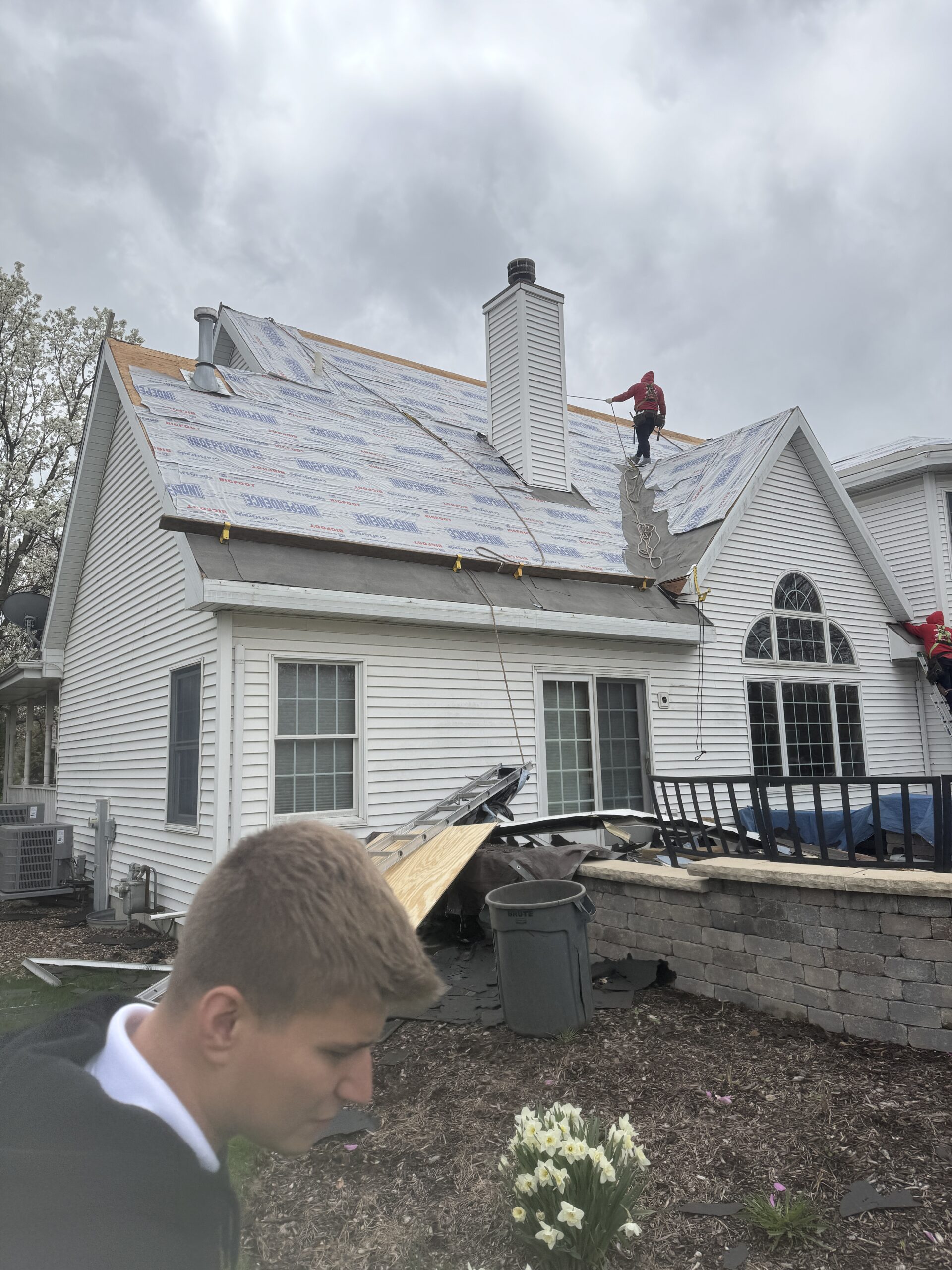
If a roof is old, leaking repeatedly, or missing key protective layers, replacement may be the stronger solution. A proper Roof installation for Illinois weather should include tear-off, deck inspection, underlayment, ice and water protection, flashing, drip edge, ventilation, ridge caps, and clean gutter integration.
These details matter because winter leaks often happen at transitions, edges, and penetrations. A new roof should be installed as a full weather protection system.
A new roof should work with the attic
Even a new roof can face ice dam problems if attic heat loss and poor ventilation are ignored. During replacement, homeowners should ask about ventilation, soffit airflow, and roof edge protection.
The best winter protection comes from roofing and attic improvements working together.
Safe snow removal can reduce roof edge stress
After heavy snow, homeowners may wonder if they should remove snow from the roof. In some cases, reducing snow load near the roof edge can help lower ice dam risk. However, climbing on a snowy roof is dangerous and should be avoided.
A roof rake designed for ground use can help remove snow from lower roof edges if used carefully. Homeowners should avoid damaging shingles or pulling at gutters.
Avoid unsafe ice dam removal methods
Do not chip ice with sharp tools, pour hot water repeatedly, or use methods that can damage shingles, gutters, or siding. Damaged materials can create more leaks.
If ice buildup is severe or water is entering the home, call a professional for safe guidance.
Interior warning signs should be checked quickly
An ice dam roof leak may show up as a ceiling stain, peeling paint, damp drywall, wet insulation, or water near exterior walls. Sometimes homeowners also notice musty odors in the attic or dark stains on roof decking.
These warning signs should not be ignored. Even if the leak stops after temperatures change, the moisture problem may return during the next freeze and thaw cycle.
Attic moisture can look like a roof leak
Condensation in the attic can create stains and damp insulation even when the roof surface is not leaking. Poor ventilation and air leaks can allow warm indoor air to condense on cold roof decking.
A professional inspection can help determine whether the issue is outside water entry or indoor moisture buildup.
A simple homeowner checklist can reduce winter roof risks
Tinley Park homeowners do not need to become roofing experts, but a few steps can help lower the chance of winter problems.
Before winter, homeowners should:
- Clean gutters and downspouts so water drains properly
- Schedule a roof inspection if shingles, flashing, or gutters look worn
- Check the attic for moisture, stains, or blocked vents
- Trim branches that hang near the roof
- Repair small roof issues before snow and ice arrive
These steps support better winter performance and reduce emergency surprises.
Professional help matters when ice dams keep returning
If your home gets ice dams every winter, the problem likely needs more than gutter cleaning. Repeated ice dams may point to attic air leaks, poor insulation, blocked ventilation, weak roof edge protection, or a combination of issues.
A contractor can inspect the roof and attic together, then explain which improvements make sense.
Long-term prevention starts with the full system
The best approach includes reducing attic heat loss, improving airflow, protecting roof edges, keeping drainage clear, and repairing weak roofing details.
This full-system approach is stronger than treating ice dams as a surface-only problem.
Conclusion
Strong ice dam prevention tinley park il homeowners can rely on starts before the first heavy snow. Ice dams form when heat loss, uneven roof temperatures, snow melt, and freezing roof edges combine. Once ice builds up, water can back up under shingles and create winter leaks inside the home.
Prevention includes proper attic insulation, air sealing, ventilation, roof edge protection, gutter cleaning, and timely roof repairs. If your home has had past ice dams or winter leaks, a professional inspection can help identify the cause before damage returns.
Call Clearway Exteriors today at (866) 328-1110 to schedule a winter roof inspection or speak with a roofing professional about ice dam prevention, roof repair, roof installation, and exterior needs in Tinley Park, IL. Visit us at 18521 Spring Creek Drive Unit B, Tinley Park, IL 60477.
Ice Dam and Winter Roof Leak FAQs
What causes ice dams on a roof?
Ice dams form when heat from the attic melts snow on the roof and the water refreezes near the colder roof edge, creating an ice ridge that can trap more water behind it.
How can I prevent ice dams in Tinley Park?
Prevent ice dams by improving attic insulation, sealing air leaks, keeping attic ventilation clear, cleaning gutters, removing roof debris, and repairing weak roof edges before winter.
Can an ice dam cause a roof leak?
Yes, an ice dam can cause a roof leak when trapped meltwater backs up beneath shingles and reaches the underlayment, roof deck, attic, or interior ceiling areas.
Should I remove snow from my roof?
Light snow removal from the roof edge with a ground-use roof rake may help in some cases, but homeowners should avoid climbing on snowy roofs or using sharp tools that can damage shingles.
When should I call a roofing contractor for winter leaks?
Call a roofing contractor if you see ceiling stains, attic moisture, ice buildup at the eaves, damaged shingles, loose flashing, clogged gutters, or repeated winter roof leaks.