
A storm damage roof claim new lenox il homeowner may need to file can feel confusing at first. After wind, hail, heavy rain, or flying debris hits the home, many people are not sure what to do first. Some damage is easy to see, such as missing shingles, dented gutters, broken vents, or branches on the roof. Other damage can stay hidden until the next storm causes water stains, attic moisture, or an active leak.
New Lenox homeowners face the same weather risks common across the Chicago south suburbs. Strong wind can lift shingles. Hail can bruise roofing materials. Heavy rain can expose flashing issues. Snow and freeze cycles can make small openings worse over time. When storm damage happens, the right steps can help you stay organized and avoid making rushed decisions.
This guide explains how roof storm damage claims work, how to document damage, what to expect from inspections and insurance adjusters, and how a local roofing professional can help you understand repair or replacement options.
Why storm damage should be inspected before filing a claim
A roof does not always leak right after a storm. Hail may damage shingle granules without creating an immediate hole. Wind may loosen shingles but leave them in place. Flashing may separate slightly and only leak during the next heavy rain.
Before filing a claim, many homeowners choose to schedule a roof inspection so they understand whether damage is present. This helps avoid filing a claim based only on guesswork. It also gives you a clearer picture of what happened before speaking with your insurance company.
Hidden roof damage can become expensive later
Small roof damage can grow when weather changes. A lifted shingle can let rain beneath the surface. Bruised shingles can lose protection faster. Loose flashing can become a leak point. If these issues are ignored, the roof may become more vulnerable during the next storm.
An inspection helps identify whether the damage is minor, widespread, or urgent.
Homeowners should start with safety and basic documentation
After a storm, do not climb onto the roof. Wet shingles, loose materials, and hidden damage can make the surface dangerous. Start with a safe ground-level check around the home.
Take photos of visible damage if it is safe. Record the storm date, time, and type of weather. Keep photos of roof debris, dents, missing shingles, damaged siding, broken screens, water stains, and gutter damage. The Illinois Department of Insurance recommends homeowners keep detailed records and contact their insurance company representative when there are differences over repair costs or hidden damage.
Keep all claim documents in one place
Good organization matters during a roof claim. Keep inspection reports, estimates, photos, insurance emails, claim numbers, adjuster notes, and repair invoices together.
This makes it easier to answer questions and compare the insurance scope with contractor findings.
Common signs of roof storm damage in New Lenox
Storm damage can appear on several parts of the home. Roof damage is not always limited to shingles. Gutters, downspouts, vents, flashing, siding, fascia, soffit, and windows may also show impact.
After strong wind or hail, look for visible warning signs from the ground. These clues can help you decide whether to schedule a professional inspection.
Homeowners can safely look for these warning signs
Check for:
- Missing, lifted, cracked, or loose shingles
- Dented gutters, downspouts, vents, or metal flashing
- Shingle granules near downspouts or walkways
- Water stains on ceilings, walls, or attic wood
- Branches, roof debris, or damaged exterior trim
These signs do not always prove the full damage level, but they show that your home should be inspected.
Wind damage insurance claim steps should be handled carefully
A wind damage insurance claim usually begins when the homeowner reports storm damage to the insurance company. The insurer may assign an adjuster to inspect the property and review the damage under the policy terms.
Before filing, review your policy, deductible, and coverage details. Insurance coverage depends on your specific policy, the cause of damage, the roof condition, the date of loss, and the adjuster’s findings.
Wind damage may not be obvious from the ground
Wind can loosen shingle seals, lift roof edges, damage ridge caps, or loosen flashing. Even if shingles are still attached, they may no longer protect the roof properly.
A trained inspection can help identify these issues before the claim process moves forward.
Roof claim documentation helps support a clear process
Strong roof claim documentation includes photos, inspection notes, repair estimates, storm dates, and communication records. Documentation does not guarantee claim approval, but it helps make the process clearer.
A roofing contractor can document visible damage and provide an estimate for repair or replacement. The insurance company still determines coverage based on the policy and adjuster review.
Good documentation should be factual
Avoid exaggerating damage or guessing about what happened. Record what you see. Save photos with dates when possible. Keep notes about leaks, interior stains, and any temporary protection used.
A clear file is better than scattered information.
A professional roof inspection gives the claim a stronger starting point
A professional inspection should review the full roofing system. This includes shingles, flashing, pipe boots, vents, valleys, roof edges, gutters, soffit, fascia, attic signs, and interior water stains if present.
The contractor should explain what damage appears storm-related, what may be normal wear, and what work may be needed. This helps homeowners understand the condition before making decisions.
The inspection should include photos and written findings
Photos help homeowners see damage they cannot safely inspect themselves. Written findings help explain the scope of work.
This information can also be useful when discussing damage with the insurance company.
A roofing contractor can help explain repair and replacement options
A trusted roofing contractor can inspect the roof, explain damage, prepare a written estimate, and help homeowners understand whether repair or replacement is the better path. They should not promise that insurance will approve a claim or pay for a new roof.
A contractor’s job is to inspect and repair the roof. The insurer’s job is to decide coverage based on the policy.
Clear roles prevent confusion
The contractor can document visible damage. The insurance adjuster reviews coverage. The homeowner makes decisions based on policy terms, estimates, and repair needs.
Keeping these roles clear helps avoid unrealistic expectations.
Roof repair may be enough for isolated storm damage
Some storm damage can be repaired without full replacement. A targeted Roof-repair may be enough when only a few shingles are missing, flashing is loose, a pipe boot is damaged, or one area has a leak.
Repair can be a practical option when the roof is otherwise in good condition and the damage is limited.
Repairs should address the real source
A repair should fix the cause, not just cover the visible symptom. If water is entering around flashing, replacing a few shingles may not solve the problem.
A good contractor should explain exactly what will be repaired and why.
Roof replacement may be needed when storm damage is widespread
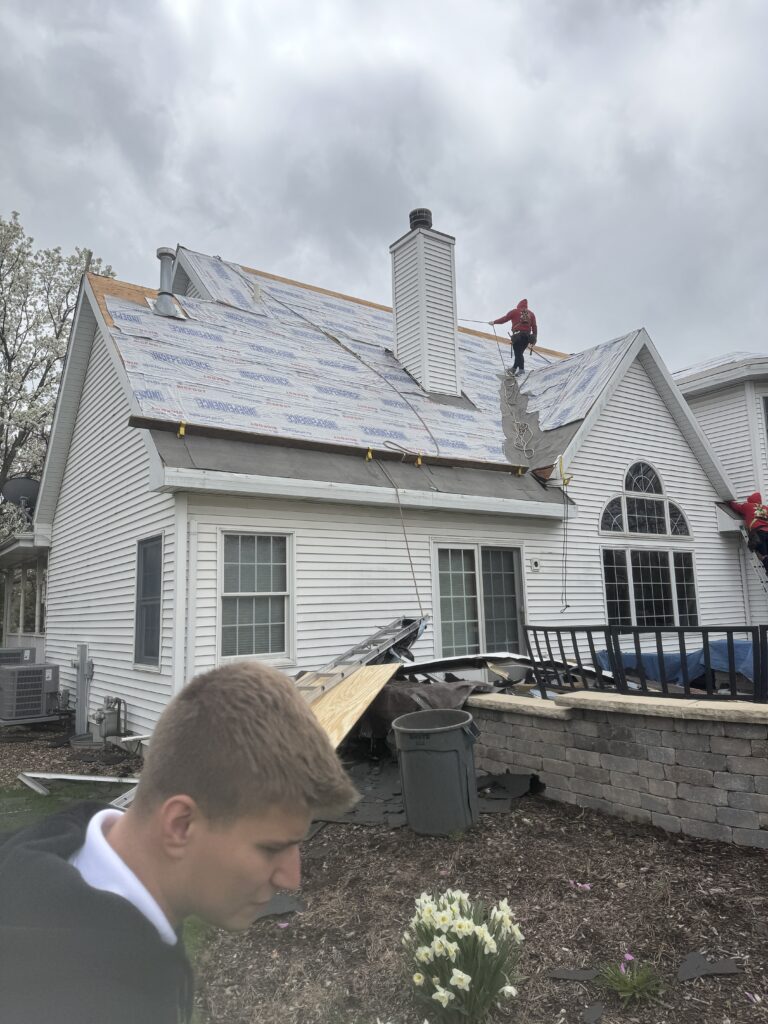
If the roof has damage across multiple slopes, heavy hail impact, repeated leaks, brittle shingles, or major wind damage, replacement may be recommended. A complete Roof installation should include tear-off, deck inspection, underlayment, flashing, ventilation, drip edge, ridge caps, and cleanup.
A replacement estimate should explain the full roofing system, not only the shingle brand.
Replacement should restore full weather protection
Storm damage restoration is not only about making the roof look better. It is about restoring the roof’s ability to protect the home from future rain, wind, snow, and ice.
This is especially important for homes that already had aging materials before the storm.
The adjuster inspection is an important part of the claim
After you file a claim, the insurance company may send an adjuster to inspect the home. The adjuster documents damage and prepares an estimate based on the policy. Homeowners should share the storm date, visible damage photos, contractor inspection findings, and interior leak details if available.
Review the adjuster’s estimate carefully. If something appears missing or unclear, contact the insurance company representative and ask questions. The Illinois Department of Insurance notes that homeowners should try to resolve repair cost differences or hidden damage concerns with their insurance representative first.
The insurance scope should match the needed work
Compare the insurance estimate with the contractor’s scope. Look at shingles, flashing, gutters, vents, decking, code-related items, and cleanup.
If the contractor finds hidden damage later, document it and communicate through the proper claim process.
Homeowners should understand deductibles and policy limits
Your deductible is the amount you pay out of pocket before insurance applies to covered damage. The Illinois Department of Insurance explains that a deductible applies to claims on the home and personal property under homeowners insurance.
Policy details matter. Some policies may handle roof age, material type, depreciation, replacement cost, or actual cash value differently. Homeowners should read the policy or speak with the insurer for clarification.
Do not assume every roof issue is covered
Insurance usually depends on the cause of damage. Storm damage may be treated differently from wear, age, poor maintenance, or installation issues.
This is why inspection and documentation are important before making assumptions.
Public adjusters and storm repair scams require caution
After storms, homeowners may be approached by repair companies, salespeople, or adjusters. Be careful with anyone who pressures you to sign quickly or promises guaranteed insurance approval.
The Illinois Attorney General has warned residents to watch for storm-related repair scams, and has noted that public adjusters must be licensed by the Illinois Department of Insurance while roofers must be licensed by the Illinois Department of Financial and Professional Regulation.
A professional contractor should not use pressure tactics
Avoid contractors who refuse written estimates, ask for unusually large upfront payments, or offer confusing claim promises.
A reliable contractor should provide clear information and give you time to review.
Storm restoration in New Lenox should include the full exterior
Storm restoration New Lenox homeowners need may involve more than the roof. Hail and wind can damage siding, gutters, downspouts, soffit, fascia, windows, doors, vents, and exterior trim.
If only the shingles are inspected, other important damage may be missed. A complete exterior review helps homeowners understand the full storm impact.
Gutters and siding can show roof damage clues
Dented gutters and downspouts can indicate hail impact. Damaged siding can show storm direction. Granules near downspouts can point to shingle surface damage.
These details help create a fuller picture of what happened.
Temporary protection can help during active leaks
If storm damage causes an active leak, temporary protection may be needed before permanent repairs can happen. This may involve tarping or other emergency measures. Temporary work can help limit interior damage, but it does not replace proper repair.
If water enters the home, move belongings away from the area if safe. Avoid electrical hazards. Take photos of the leak and interior damage.
Permanent repairs should follow temporary protection
A tarp can reduce immediate water entry, but the damaged roof still needs inspection and repair. Waiting too long can allow moisture to spread.
Schedule professional help as soon as possible.
Homeowners should keep communication clear from start to finish
Storm claims involve several people: the homeowner, contractor, insurance company, adjuster, and sometimes mortgage company. Clear communication helps prevent delays and confusion.
Write down claim numbers, names, dates, and next steps. Save emails and documents. Ask for explanations when something is unclear.
Organized homeowners usually have a smoother claim experience
A simple folder with photos, reports, estimates, and insurance notes can make the process easier.
When everyone is working from clear information, decisions are easier to make.
Conclusion
A storm damage roof claim new lenox il homeowner files should begin with safety, inspection, documentation, and clear communication. Storm damage is not always obvious, and a roof may not leak right away. Wind, hail, and heavy rain can weaken shingles, flashing, gutters, and roof edges before the damage becomes visible indoors.
The best approach is to inspect safely from the ground, document visible damage, schedule a professional roof inspection, review your policy, and work through the insurance process carefully. A local contractor can help explain repair or replacement options while the insurance company determines coverage.
Call Clearway Exteriors today at (866) 328-1110 to schedule a storm damage roof inspection or speak with a roofing professional about roof repair, roof installation, and exterior restoration in New Lenox, Tinley Park, and nearby Illinois communities. Visit us at 18521 Spring Creek Drive Unit B, Tinley Park, IL 60477.
Storm Damage Roof Claim FAQs
What should I do before filing a storm damage roof claim?
Start by checking the property safely from the ground, taking photos of visible damage, recording the storm date, reviewing your policy, and scheduling a professional roof inspection.
Does wind damage always qualify for an insurance claim?
Wind damage coverage depends on your insurance policy, deductible, roof condition, cause of damage, date of loss, and the insurance adjuster’s review.
What roof claim documentation should homeowners keep?
Homeowners should keep photos, storm dates, inspection reports, written estimates, claim numbers, adjuster notes, insurance emails, and repair invoices in one organized file.
Can a roofing contractor help with my insurance claim?
A roofing contractor can inspect the roof, document visible damage, provide photos, and prepare a written repair or replacement estimate, but the insurance company decides coverage.
When should I call for storm restoration in New Lenox?
Call for storm restoration after hail, wind, missing shingles, dented gutters, roof debris, ceiling stains, attic moisture, siding damage, or any visible exterior storm damage.