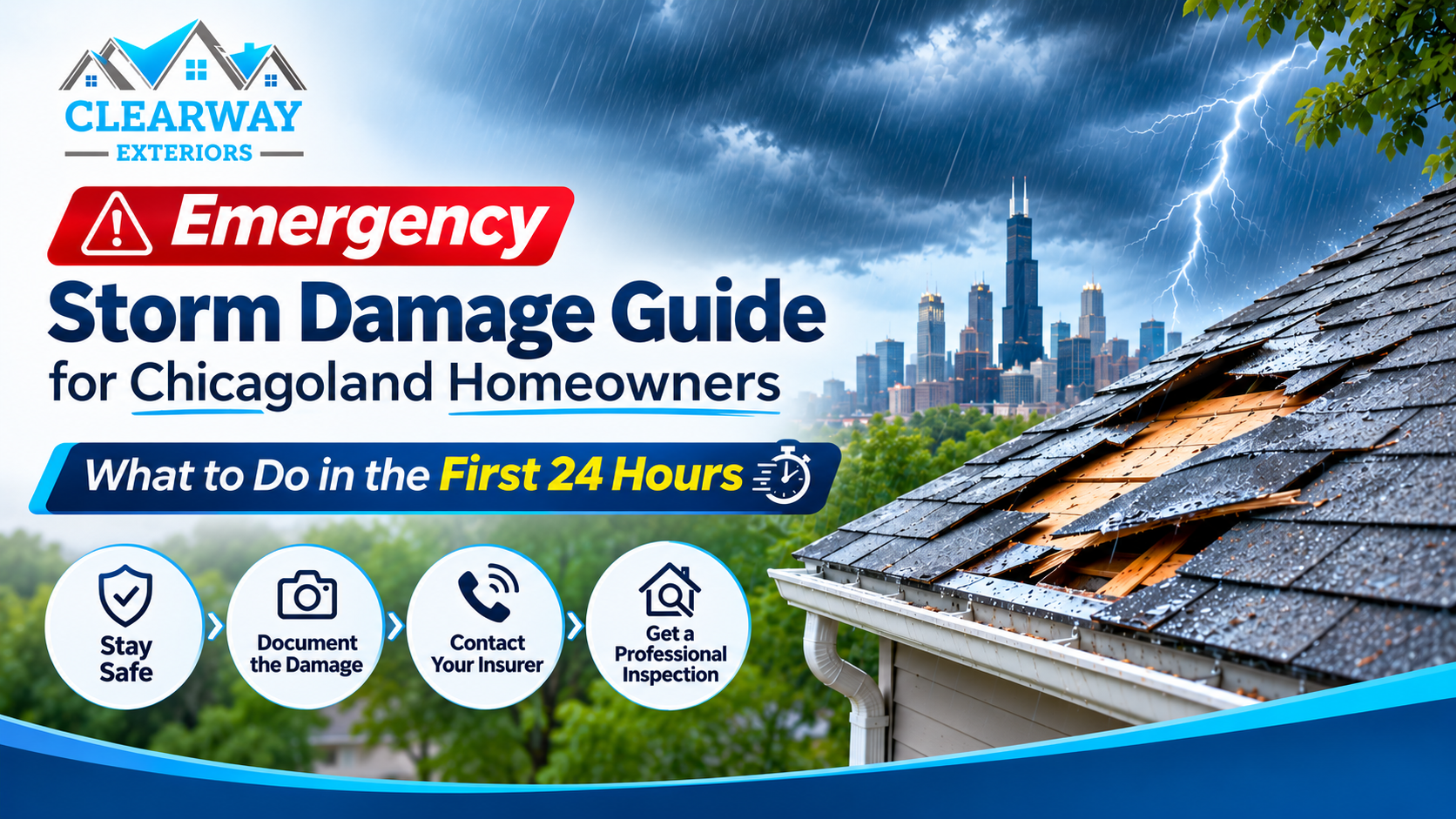
A powerful storm can change the condition of your home in minutes. Strong winds may remove shingles, hail can damage roofing materials, and falling branches can leave openings that expose the interior to rain. Knowing how to handle emergency storm damage repair Chicagoland homeowners may need helps protect the property while reducing confusion during the first 24 hours.
Across Tinley Park, Orland Park, Frankfort, New Lenox, and surrounding Chicago suburbs, severe weather can affect roofing, siding, gutters, windows, and other exterior components. Some damage is immediately visible. Other problems remain hidden until the next rainfall reveals a leak.
The first day following a storm is especially important because homeowners must balance personal safety with the need to prevent additional property damage.
Clearway Exteriors provides storm damage inspections, roofing repairs, and exterior restoration services throughout Chicagoland. This guide explains what to do during the first hour, which problems require immediate professional attention, and how to organize repairs and insurance documentation.
During the first hour, make sure everyone is safe
Immediately after severe weather, protecting people matters more than inspecting the property. Strong storms can leave unstable branches, broken glass, damaged electrical equipment, and loose building materials.
Remain indoors until dangerous conditions have passed. If authorities issue emergency instructions, follow them before attempting cleanup.
Check for hazards before walking outside
Fallen power lines, damaged trees, and unstable structures require particular caution.
Treat any downed electrical line as energized. Keep people and pets away and contact the utility provider or emergency services.
Avoid entering rooms with suspected structural damage
A fallen tree or large roof impact may weaken framing or ceiling supports.
If walls shift, ceilings sag, or structural movement is suspected, leave the affected area and seek professional emergency assistance.
Never climb onto a damaged roof
Wet shingles, exposed decking, and loose materials create serious fall hazards.
Roof inspections and temporary coverings should be handled by qualified professionals using suitable safety equipment.
During hours one and two, identify the most urgent damage
Once conditions are safe, begin examining the property from ground level.
Look for obvious changes around roof edges, gutters, siding, windows, and outdoor structures. This initial assessment helps determine whether the home requires immediate protection or a scheduled inspection.
Missing shingles can expose vulnerable roofing materials
Shingles displaced by high winds may leave underlayment or roof decking exposed.
Although underlayment provides secondary moisture protection, it is not intended to remain uncovered for extended periods.
Fallen branches may damage more than the visible roof surface
A heavy limb can crack shingles, damage flashing, or affect structural components beneath the roof covering.
Avoid moving large branches resting against the building. Their removal may require a tree specialist and structural evaluation.
Exterior damage may be concentrated on one side
Wind often causes greater damage on elevations facing the strongest gusts.
Inspect visible siding panels, gutters, downspouts, and window screens without entering unsafe areas.
Protect interior rooms when water begins entering the home
An active roof leak requires prompt attention because moisture can spread into insulation, ceilings, flooring, and personal belongings.
Move furniture and valuables away from affected areas when doing so is safe.
Contain water without creating additional hazards
Place suitable containers beneath dripping water and use towels to limit spreading across floors.
If water reaches electrical fixtures, outlets, or equipment, avoid contact and seek qualified assistance.
Photograph interior damage before cleanup
Water stains, damaged ceilings, wet carpets, and affected belongings should be documented.
Pictures taken early can help establish the condition of the property and support later repair discussions.
Avoid disturbing damaged ceiling materials
A ceiling holding significant water may collapse unexpectedly.
Keep people away from sagging sections and arrange professional assessment rather than attempting to puncture or dismantle the ceiling yourself.
During hours two through four, document visible storm damage
Photographs and written observations create a useful record of what happened.
Begin with wider pictures showing the affected roof elevation or exterior wall. Follow with closer photographs taken safely from the ground.
Your storm damage checklist should include key information
Record:
- The approximate date and time of the storm
- Missing shingles and visible roofing debris
- Damaged gutters, siding, windows, or exterior trim
- Interior water stains and active leaks
- Temporary protection measures and related expenses
Keep these details together in a digital folder or written record.
Preserve evidence without delaying necessary protection
Documentation is helpful, but safety and preventing additional damage remain priorities.
Take photographs when practical before temporary repairs, then save invoices and records describing the protective work completed.
Understand when emergency roof tarping becomes necessary
Some storms remove enough roofing material to leave the home vulnerable to additional rainfall.
Professional roof tarping provides temporary coverage over damaged sections until permanent repairs can be completed.
Temporary protection can reduce further water intrusion
A suitable covering may help protect exposed roofing areas, particularly when a storm has removed shingles or damaged roof penetrations.
The appropriate method depends on the roof design, extent of damage, and safe access conditions.
A tarp does not restore the damaged roofing system
Temporary coverings can loosen or deteriorate during additional storms.
Permanent work must address damaged shingles, flashing, underlayment, and other affected components.
Professional installation avoids unnecessary additional damage
Improper fastening may create new openings or damage surrounding roofing materials.
Homeowners should avoid installing roof tarps themselves, especially when the surface is steep, wet, or structurally uncertain.
During hours four through eight, contact a roofing professional
When immediate safety concerns are controlled, arrange an inspection of the affected roofing system.
Homeowners searching for an emergency roofer near me should prioritize qualified local contractors who provide clear contact information, written estimates, and appropriate insurance.
A roofing contractor should inspect the complete affected area
A professional roofing contractor evaluates accessible shingles, flashing, vents, valleys, and roof edges.
Nearby gutters, fascia, siding, and other exterior components may also require attention when the same storm affected several areas.
Ask about inspection and emergency service availability
Homeowners looking for 24/7 storm damage repair should confirm actual service hours and response availability directly with the provider.
Not every roofing company offers overnight emergency crews. If an immediate hazard exists, use the appropriate emergency service rather than waiting for a routine roofing appointment.
A professional inspection helps separate storm damage from existing wear
Roofing materials experience gradual aging from sunlight, moisture, and temperature changes.
Severe weather can create new damage while also exposing weaknesses that developed earlier.
Wind damage may involve lifted shingles and weakened seals
A shingle does not have to disappear to be damaged.
Wind can separate adhesive bonds or create creases that reduce the material’s ability to resist future storms.
Hail damage may require closer evaluation
Impact marks, displaced granules, and damaged roof accessories can indicate hail exposure.
Not every mark represents functional damage, so inspection findings should explain the condition rather than assume replacement is necessary.
Understand the difference between emergency repairs and restoration
Immediate protection focuses on limiting additional damage.
Permanent restoration begins after the affected materials and underlying conditions have been evaluated.
Roof-repair services may address isolated damage
Professional Roof-repair work can include replacing damaged shingles, restoring flashing, repairing roof penetrations, or correcting loose roof edges.
A limited repair may be suitable when the surrounding roofing system remains sound.
Widespread damage may require larger restoration work
Multiple damaged slopes, compromised decking, or extensive material failure can justify a replacement discussion.
The contractor should explain why localized repairs would be insufficient before recommending a larger project.
During hours eight through twelve, review your insurance policy
Homeowners insurance may cover certain sudden damage caused by wind, hail, or falling objects.
However, coverage depends on the specific policy, deductible, exclusions, and insurer’s assessment.
Review reporting requirements before filing a claim
Policies may contain notice conditions and procedures for reporting damage.
Contact your insurer or insurance agent to understand the applicable process rather than assuming every policy follows the same timeline.
Contractors document damage while insurers determine coverage
A roofing professional can photograph damage and prepare repair estimates.
The insurance company evaluates the claim and determines payment according to policy terms.
Keep your deductible and expected expenses clear
Even when damage qualifies for coverage, homeowners may remain responsible for deductibles or noncovered work.
Review financial obligations before authorizing permanent restoration based on anticipated insurance proceeds.
Make sure the repair estimate explains the complete scope
A written estimate should describe damaged components, proposed materials, labor, and cleanup.
When concealed damage is possible, the contractor should explain how additional work will be identified and approved.
Roofing estimates need more than a total price
Material specifications, flashing details, ventilation considerations, and warranty information all affect the quality of a restoration project.
Comparing estimates requires understanding what each contractor proposes to repair or replace.
Hidden damage may change the final scope
Water intrusion can affect decking and other components beneath the shingles.
If additional deterioration is discovered during removal, the contractor should document it and explain the necessary corrections.
Roof installation should restore the complete protective system
Large storm restoration projects sometimes require roof replacement rather than isolated repairs.
During Roof installation, the contractor should evaluate the decking and install compatible underlayment, flashing, roof edge materials, and roofing products.
Flashing details deserve particular attention
Chimneys, skylights, walls, and roof penetrations create vulnerable transitions.
Damaged flashing must be properly restored to help prevent recurring water intrusion.
Ventilation should be reviewed when replacement is necessary
Attic airflow influences heat and moisture conditions beneath the roof deck.
Roof replacement provides an opportunity to identify existing ventilation problems and discuss suitable corrections.
Do not overlook siding, gutters, and windows after storms
A severe weather event may damage several exterior systems simultaneously.
Focusing only on missing shingles can leave related problems unnoticed.
Siding damage may expose underlying wall materials
Cracked panels and loose trim can allow wind-driven rain to reach vulnerable areas behind the exterior covering.
Repairs should address damaged connections and any underlying moisture concerns.
Gutters may lose their proper alignment
Bent gutter sections and detached downspouts can direct runoff toward siding, fascia, and foundation areas.
Correcting drainage problems helps protect completed roofing repairs.
By the end of the first day, organize the next steps
Within 24 hours, the goal is not necessarily to finish every repair. It is to establish safety, reduce active damage, arrange professional evaluation, and understand the restoration process.
Some repairs may begin quickly, while larger projects require additional inspections, materials, or insurance decisions.
Keep all important records accessible
Save inspection findings, photographs, temporary repair invoices, and contractor estimates.
If a claim is opened, record the claim number and relevant communication.
Confirm who will manage the restoration project
Homeowners should understand who performs the work, how scheduling updates will be communicated, and what happens if concealed damage is discovered.
Clear responsibilities reduce confusion when several exterior components need attention.
Avoid common mistakes during the first 24 hours
Storm damage creates pressure to make decisions quickly.
However, rushed agreements or unsafe repair attempts can create additional problems.
Do not authorize unclear work
Avoid contractors who refuse written estimates, pressure you to sign immediately, or promise guaranteed insurance approval.
Ask for explanations of the proposed scope and payment terms.
Do not postpone protection during active leaks
When water is entering the home, waiting several days without suitable temporary measures may allow additional deterioration.
Seek qualified assistance as soon as conditions permit.
Why local roofing experience matters in Chicagoland
Homes throughout Tinley Park, Orland Park, Frankfort, Mokena, New Lenox, and surrounding communities have different roof designs and storm exposure.
Some properties have multiple valleys and dormers, while others feature broad slopes and attached garages.
Local contractors understand common regional roofing challenges
Strong winds, hail, summer downpours, and winter freezing can affect roofing components in different ways.
A contractor familiar with local residential construction can evaluate these conditions alongside the roof’s actual maintenance history.
Prepare your home for future storms after repairs are completed
Recovery is also an opportunity to identify maintenance needs that may increase future storm exposure.
Regular inspections, drainage maintenance, and attention to vulnerable roof components can help reduce preventable problems.
Seasonal maintenance supports better roof performance
Homeowners should keep gutters clear, repair loose flashing, and arrange professional inspections after significant storms.
Tree branches extending over the roof may also require evaluation by a qualified tree specialist.
Conclusion
The first 24 hours after severe weather are important for limiting additional damage and establishing a clear recovery plan. Effective emergency storm damage repair Chicagoland homeowners need begins with safety, careful documentation, temporary protection when necessary, and a professional assessment of the roofing system.
Understanding the difference between immediate protection and permanent restoration helps homeowners avoid rushed decisions. Insurance information, written estimates, and accurate inspection findings provide a stronger basis for choosing the appropriate repair.
Clearway Exteriors provides roofing inspections, storm damage repairs, roof replacement, and exterior restoration services throughout Chicagoland.
Call Clearway Exteriors today at (866) 328-1110 to discuss storm damage, request an inspection, and learn about available repair services in Tinley Park and surrounding Chicago suburbs.
Emergency Storm Damage Repair FAQs
What should I do first after a storm damages my roof?
Make sure everyone is safe, stay away from fallen power lines and unstable structures, and check visible damage from the ground. Photograph affected areas, protect interior belongings from active leaks, and contact a qualified roofing professional.
When is emergency roof tarping necessary after a storm?
Emergency roof tarping may be necessary when missing shingles, damaged roofing sections, or exposed decking allow rainwater into the building. Professional tarping provides temporary protection until permanent repairs can be completed.
Should I contact my insurance company within 24 hours?
Contact your insurer promptly after discovering potentially covered damage and review your policy’s reporting requirements. Deadlines vary, so homeowners should not assume every insurance company follows the same timeline.
Does storm damage always require a complete roof replacement?
No. Isolated storm damage may be repaired by replacing shingles, flashing, or other affected components. Widespread material failure, compromised decking, or extensive damage may require larger restoration work.
How do I find a reliable emergency roofer in Chicagoland?
Look for a qualified roofing contractor with appropriate licensing, insurance, local experience, clear written estimates, and documented repair procedures. Confirm actual emergency response availability directly before relying on any advertised service hours.